
how to elope
in asheville
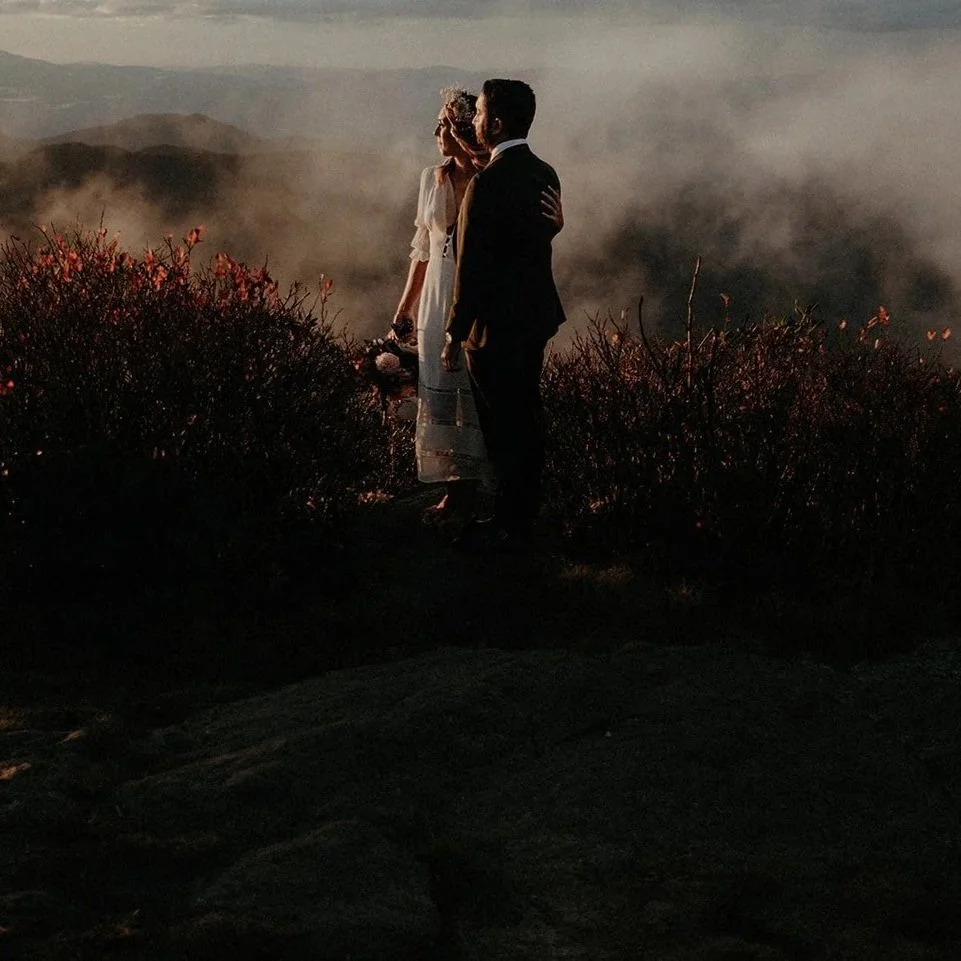
(Updated for 2026) A fully comprehensive guide to everything you need to elope in Asheville from choosing where to elope, when, location recommendations, legalities, timelines, and local secrets.
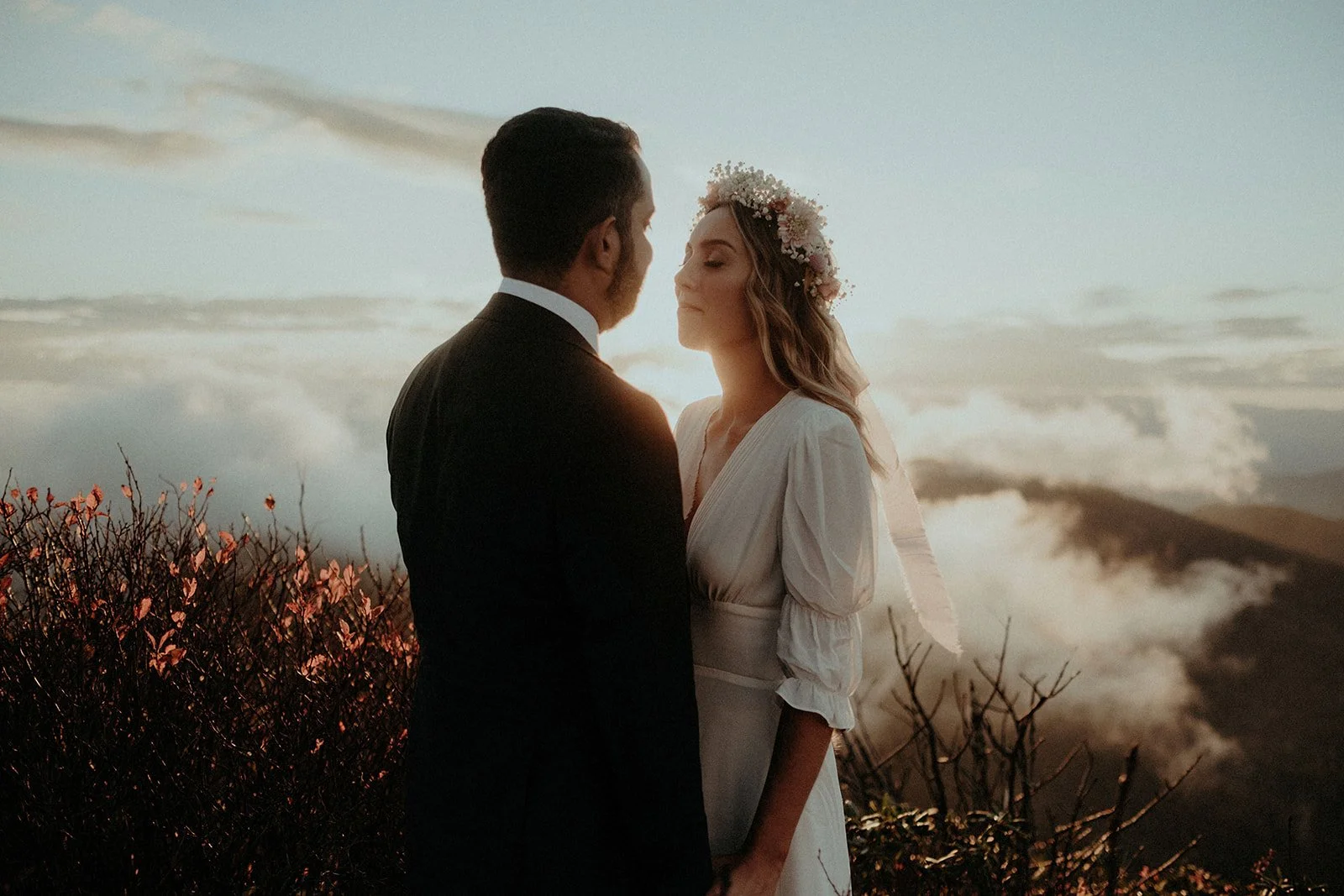
Eloping in Asheville is actually quite simple.
All you really need is 3 things: a marriage license, location, and an officiant and 2 witnesses.
So then.. what’s the point of this guide?
Below you’ll find everything you need to know from Asheville elopement ceremony locations, legalities, timelines, weather and season considerations, lodging recommendations, and what to do after you say “I do”. Consider this guide as your starting point to your Asheville elopement.
I’m alexa
ASHEVILLE ELOPEMENT PHOTOGRAPHER
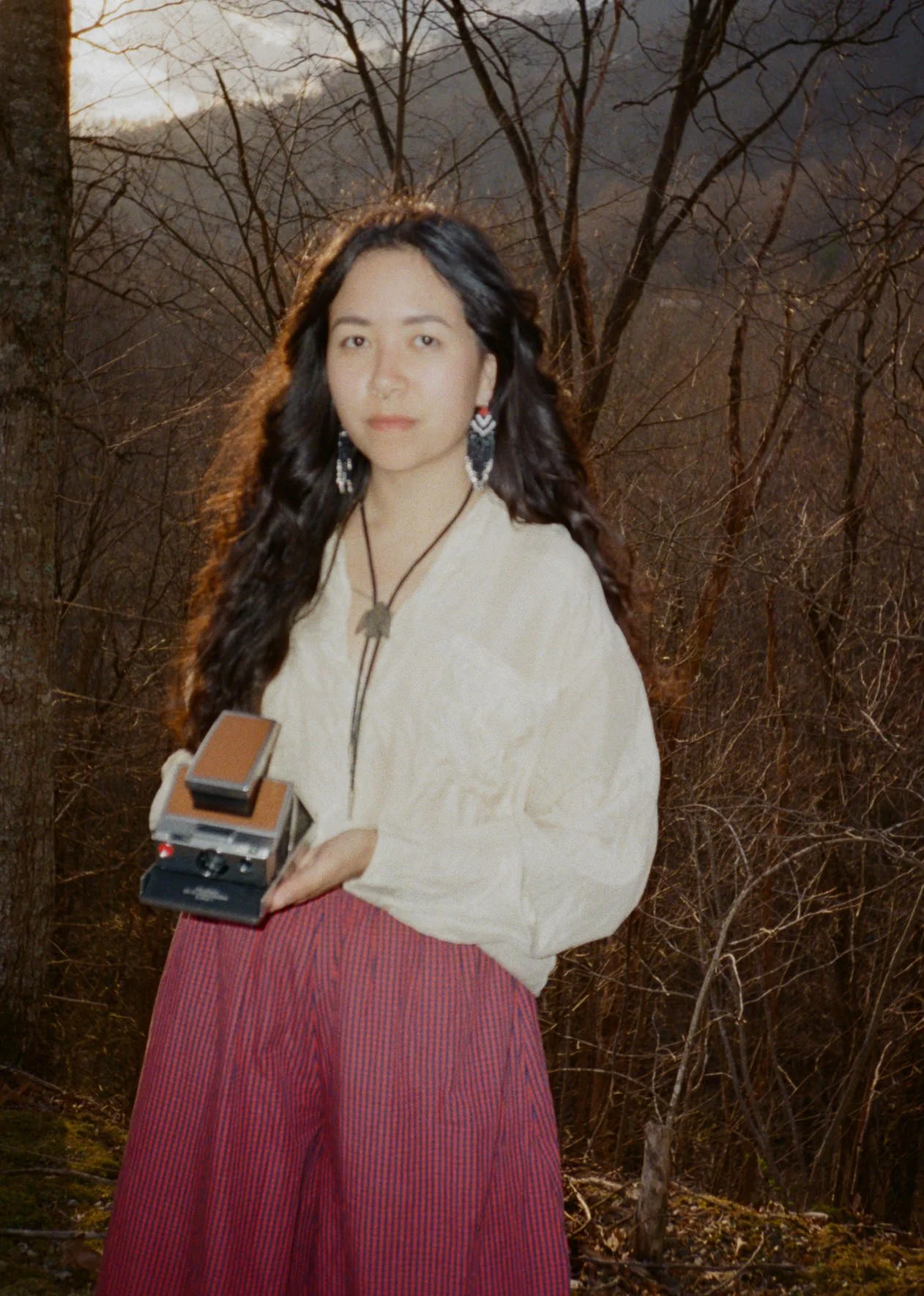
I know these mountains like the back of my hand, and I’ve been a local to the Blue Ridge since 2015. I live near Asheville, NC (out in the sticks of Maggie Valley), and showing couples around the Smoky Mountains is truly one of the greatest joys in my life.
Aside from photographing elopements entirely on film, I can guide you to the best unknown lakes and mountain ranges, tell you which trails to avoid crowds during peak leaf season with the best views around, and I’ll happily share my secret Google Maps pins to help you find the perfect place to elope in Asheville.
As helpful as it is to know where to elope, it’s just as important to know how to read and pivot with the weather here. Sometimes an elopement may need to move to another location or a different day entirely, and I work alongside you to navigate it together.
I love photography as much as I love these mountains, so I’ve put together the Guide to Asheville Elopements to help you get the most out of your experience here.
And if you’d like for me to come along for the ride, send me a message and let’s explore these mountains together.
Table of Contents
why choose asheville for your elopement
Immediate access to the outdoors
I've lived in the Asheville area on and off for the last decade, and been coming to these mountains since 2015, so take my bias for what it is.
There’s no place on the East coast like the Blue Ridge Mountains.
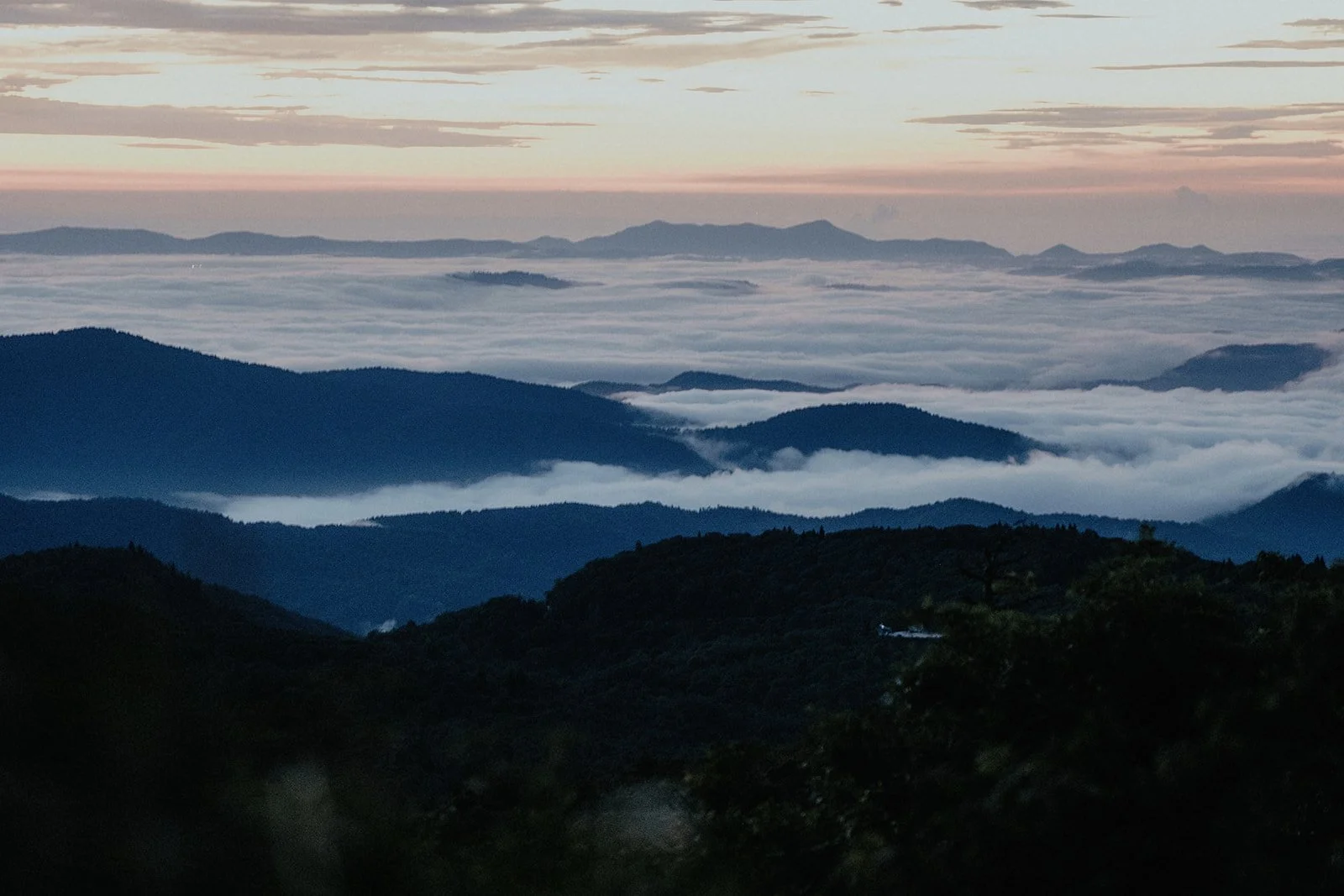
The air is crisp and clean, and one moment you’re tucked under dense fog cover and the next you’re suddenly looking out at cascading mountain layers as far as the eye can see. These mountains are wide and expansive, full of history, age, life, and Asheville itself has become home and haven to artists for decades.
The combination of accessible wilderness and an arts centered city is hard to beat. You can have your ceremony at 5,000 feet and be at dinner downtown an hour later.
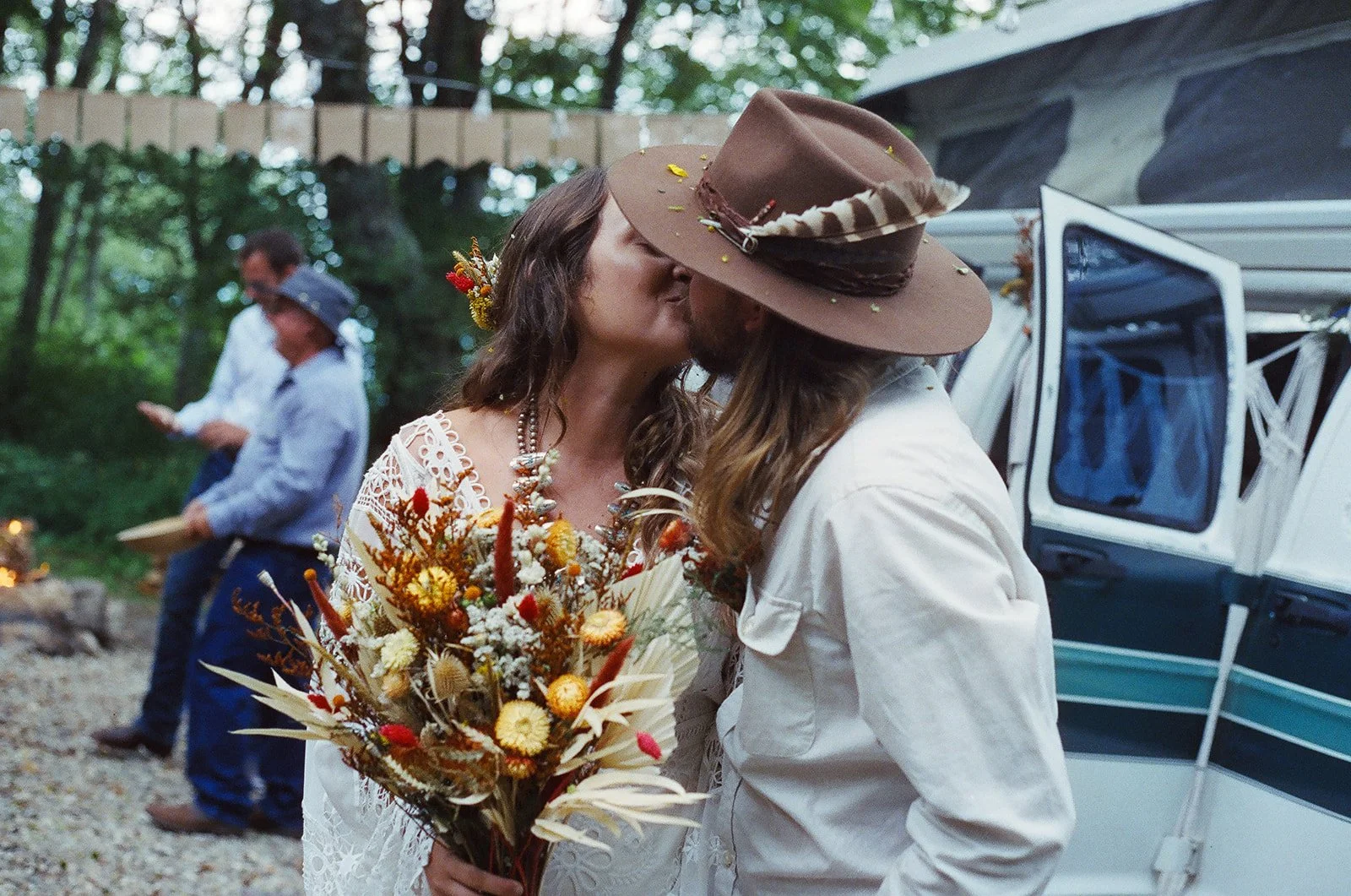
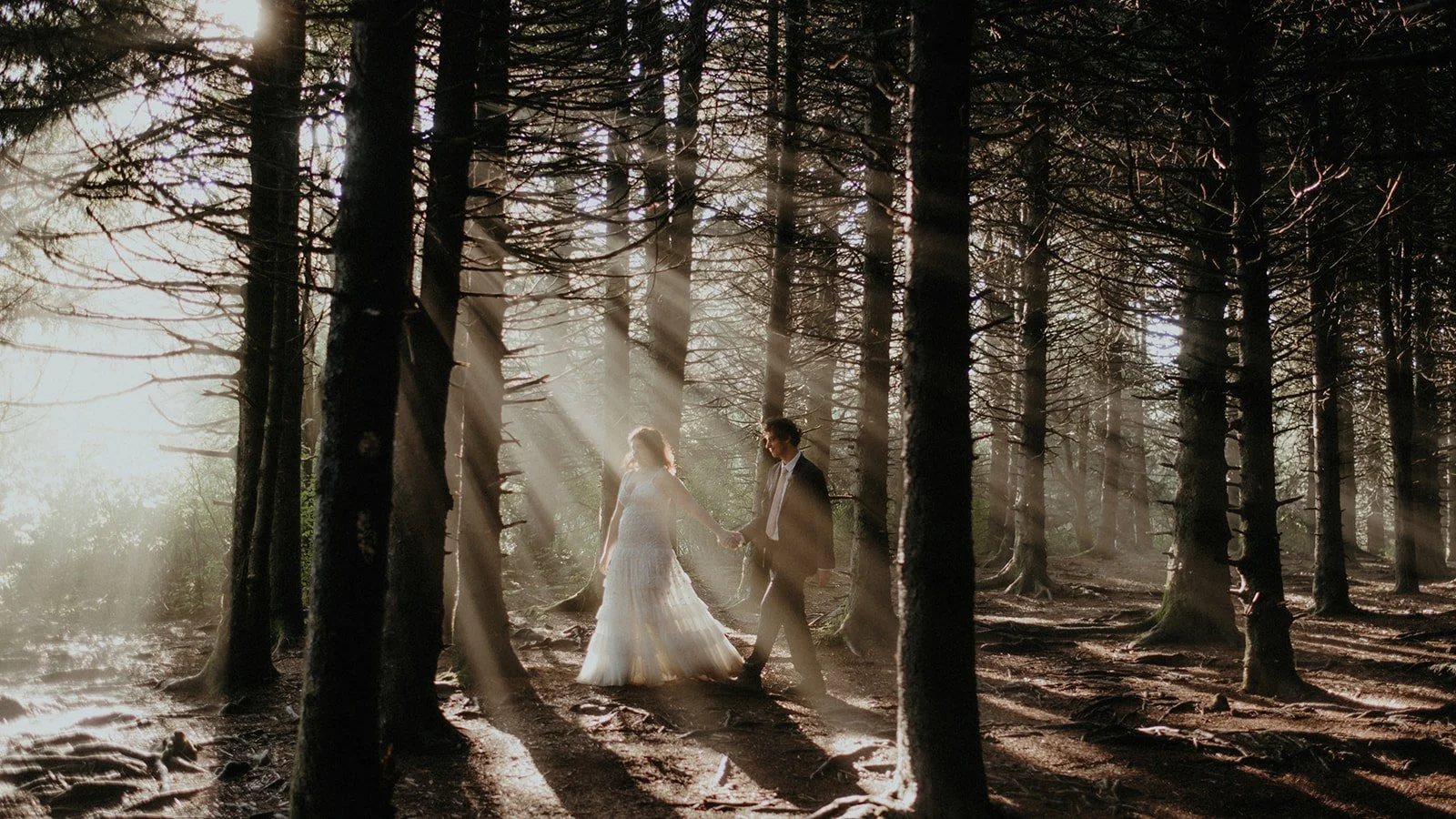
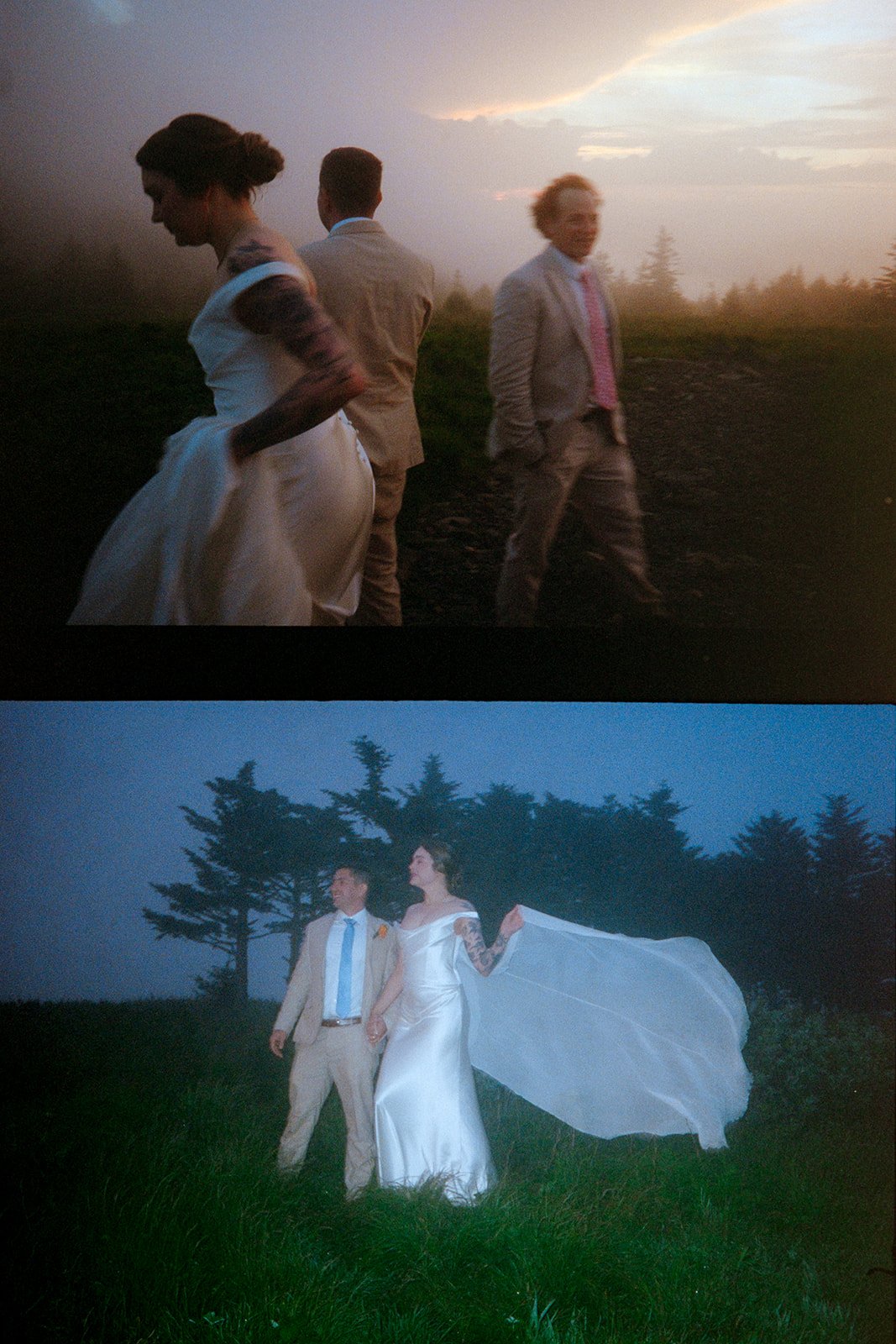
The Blue Ridge is beautiful in every season + weather condition
The light, landscape, and weather here has its own personality, and it’s apparent (in the best way).
Overcast days in the Blue Ridge don't go flat gray the way you'd expect. There's a blue-green cast that settles over everything, almost like the mountains have tinting the air.
Sunny days are sharper and warmer, and if you’re lucky enough to catch a perfect Blue Ridge sunset, the sky is fully saturated with reds, pinks, oranges, purples.
I've photographed elopements all over the country, but the light in the Blue Ridge Mountains is truly its own thing.
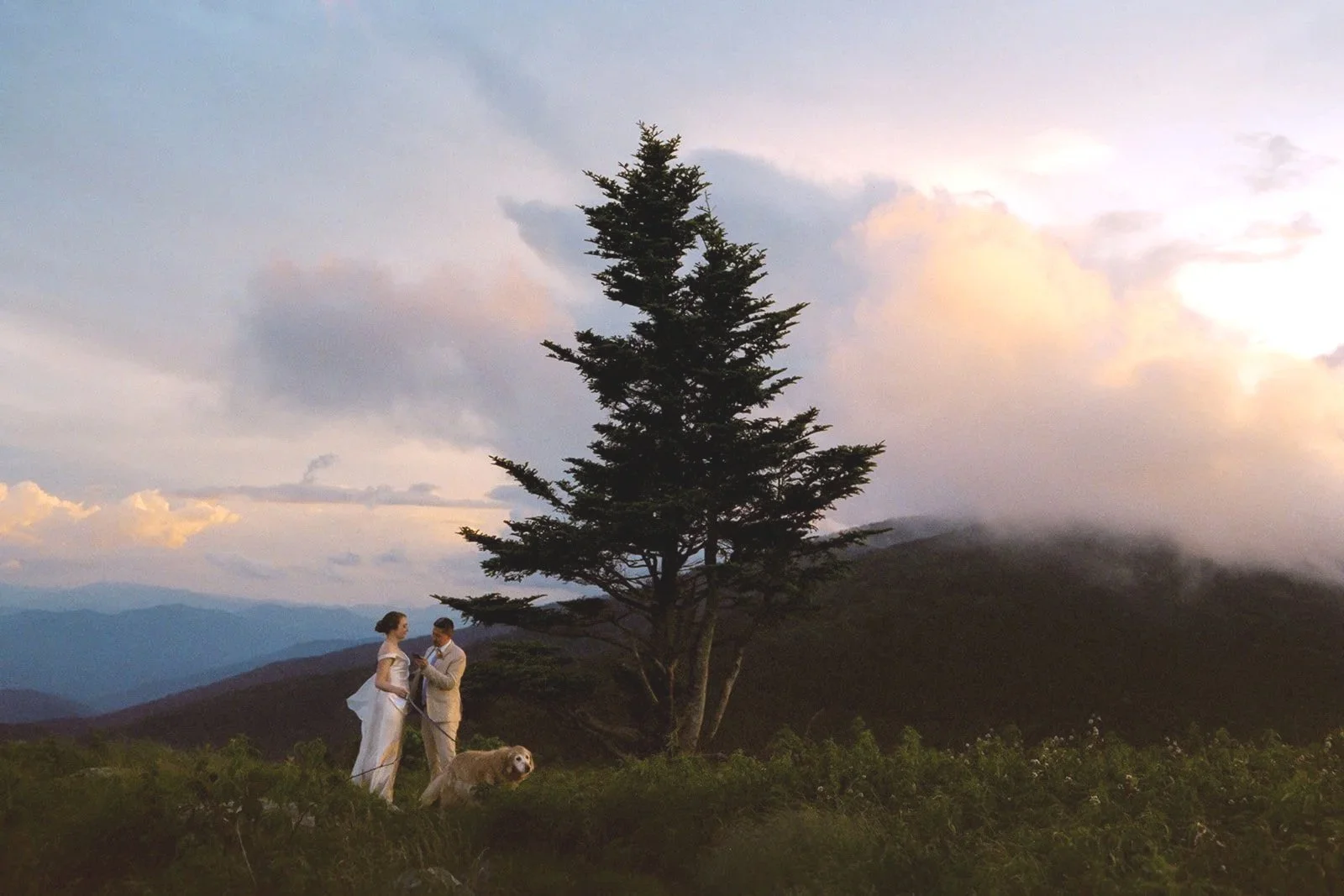
Asheville is the coolest city in the Southeast (+ dog friendly)
Asheville is harder to explain to someone who hasn't been. It's not a big city and it doesn't want to be, and we’re just as into dogs as Colorado.
Asheville is for people who want to get lost on a trail and stumble into a great meal at the end of it. Working artists and galleries and independent restaurants that have actual points of view.
Many of the hiking trails, breweries, and lodging accommodations in Asheville are dog friendly too, so your lil bud gets to come too.
People from all kinds of backgrounds who ended up here because they felt slightly out of place everywhere else. There's a reason it keeps showing up on national lists. Asheville has something going on that most cities don't.
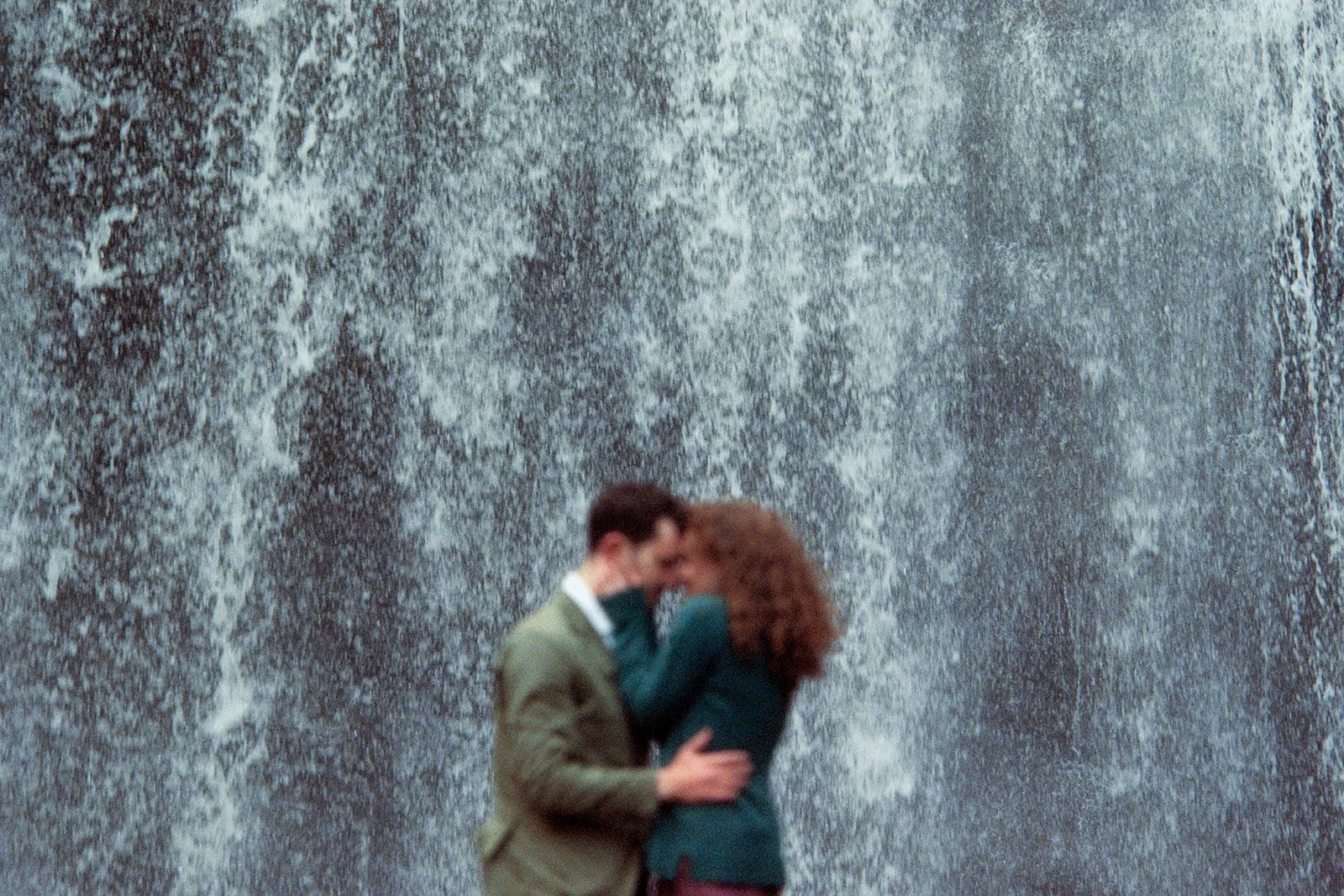
choose your adventure
Asheville has no shortage of options, which sounds great until you're three hours into a Google spiral and more confused than when you started. So before we get into the specifics, it helps to zoom out and figure out what kind of day you actually want.
At a high level, most Asheville elopements fall into one of four categories:
Mountain overlook. Easy to access, minimal hiking, big views. The tradeoff is that the most well-known spots draw crowds, especially in fall. Timing matters more here than any of the other options.
Hiking elopement. You earn the location and privacy. More effort = more payoff. If the two of you are the kind of people who'd spend a date on a trail, you can’t beat the hikes in Asheville.
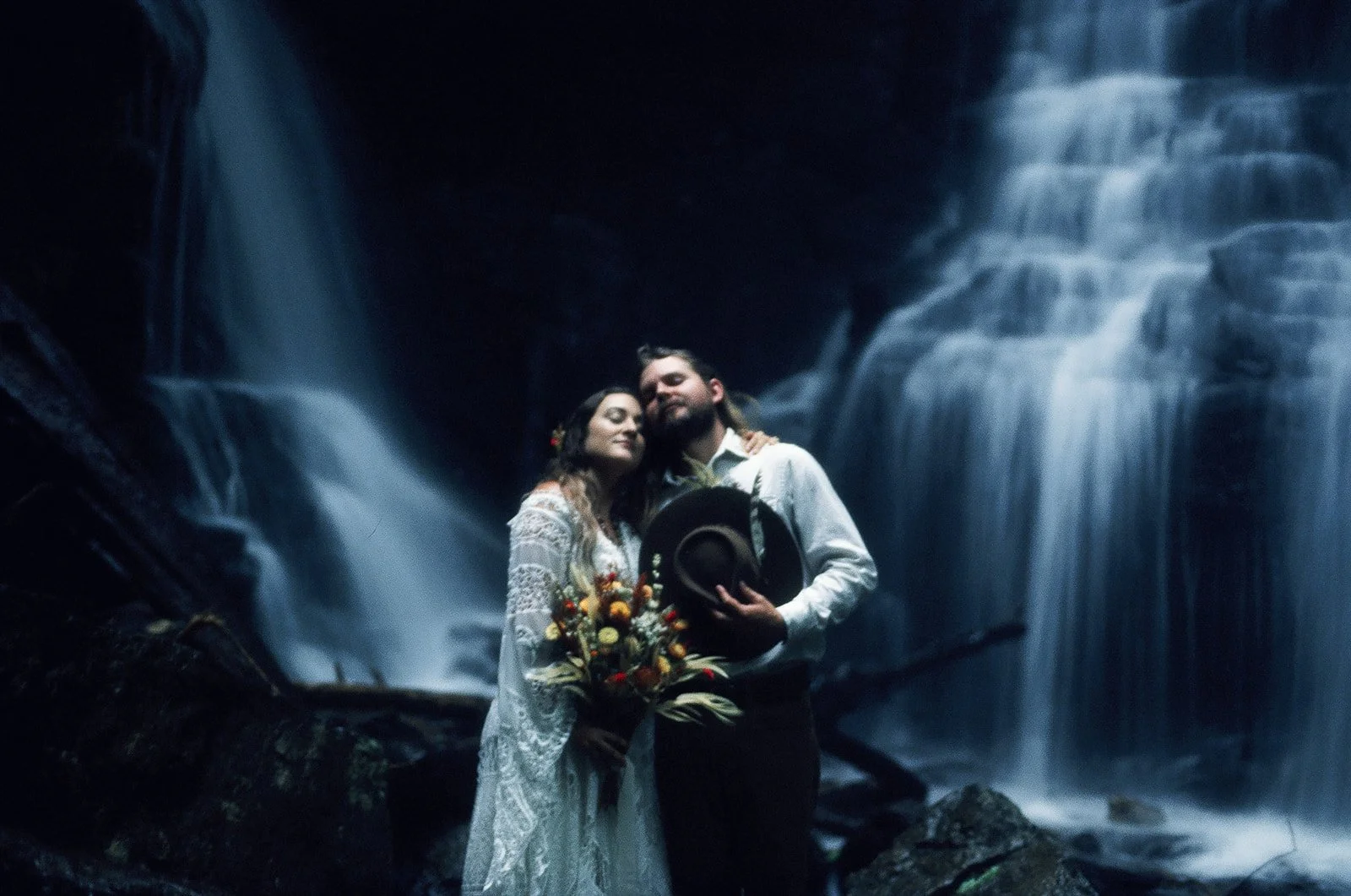
Waterfall elopement. Moody, lush, and completely dependent on season and recent rainfall. The waterfalls in WNC are unlike anywhere else on the east coast.
City elopement. Flexible, intimate, and underestimated. West Asheville and downtown have more visual texture than you’d expect. If the outdoors isn't calling to you or you want something more urban and spontaneous, this is a wonderful option.
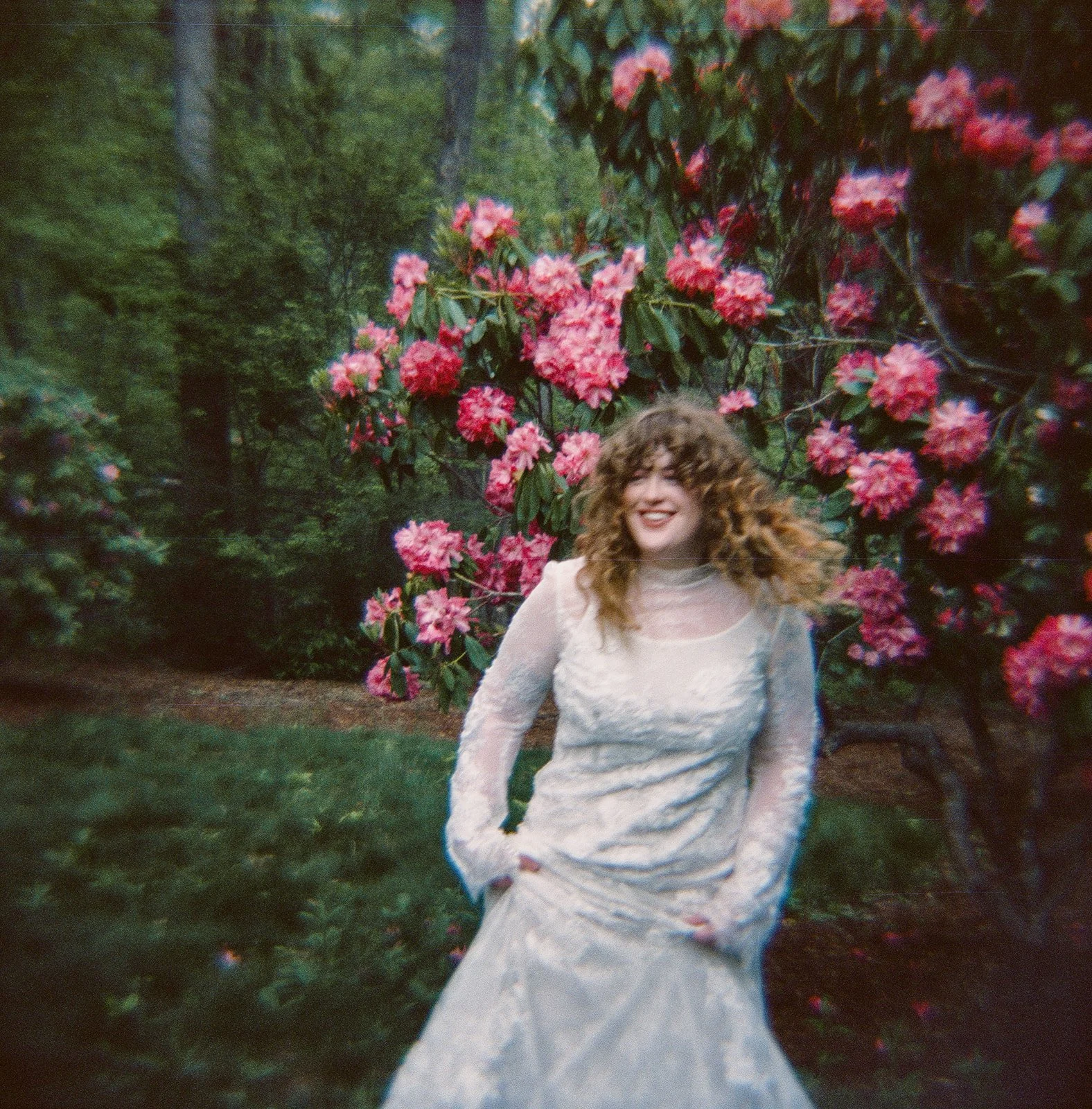
When to Elope in Asheville
The fringe seasons are the best kept secret
If you want the best views with the least amount of company, elope in the fringe seasons. Early spring (late March into early April) and late fall are when the mountains are at their most underrated, and it surprises me how few people know this.
Early spring in the Blue Ridge are when blooming wildflowers are out, the trails are quiet, and there's a softness to the light that you don't get in summer.
Late fall is its own thing entirely. The foliage is hanging on, a little moodier, a little chillier, and because the dense forest has started to thin out, the long mountain views open up in a way that early fall simply can't match. By late October into November, most of the leaf-peepers have gone home. Places like Sam Knob and Black Balsam Knob at sunset feel private in a way that's almost impossible to find in mid-October.
*TIP: elopements are typically scheduled on a weekday (Monday - Thursday) to avoid crowds, have more availability with lodging, and reduce costs associated with photographers, officiants, and venues.
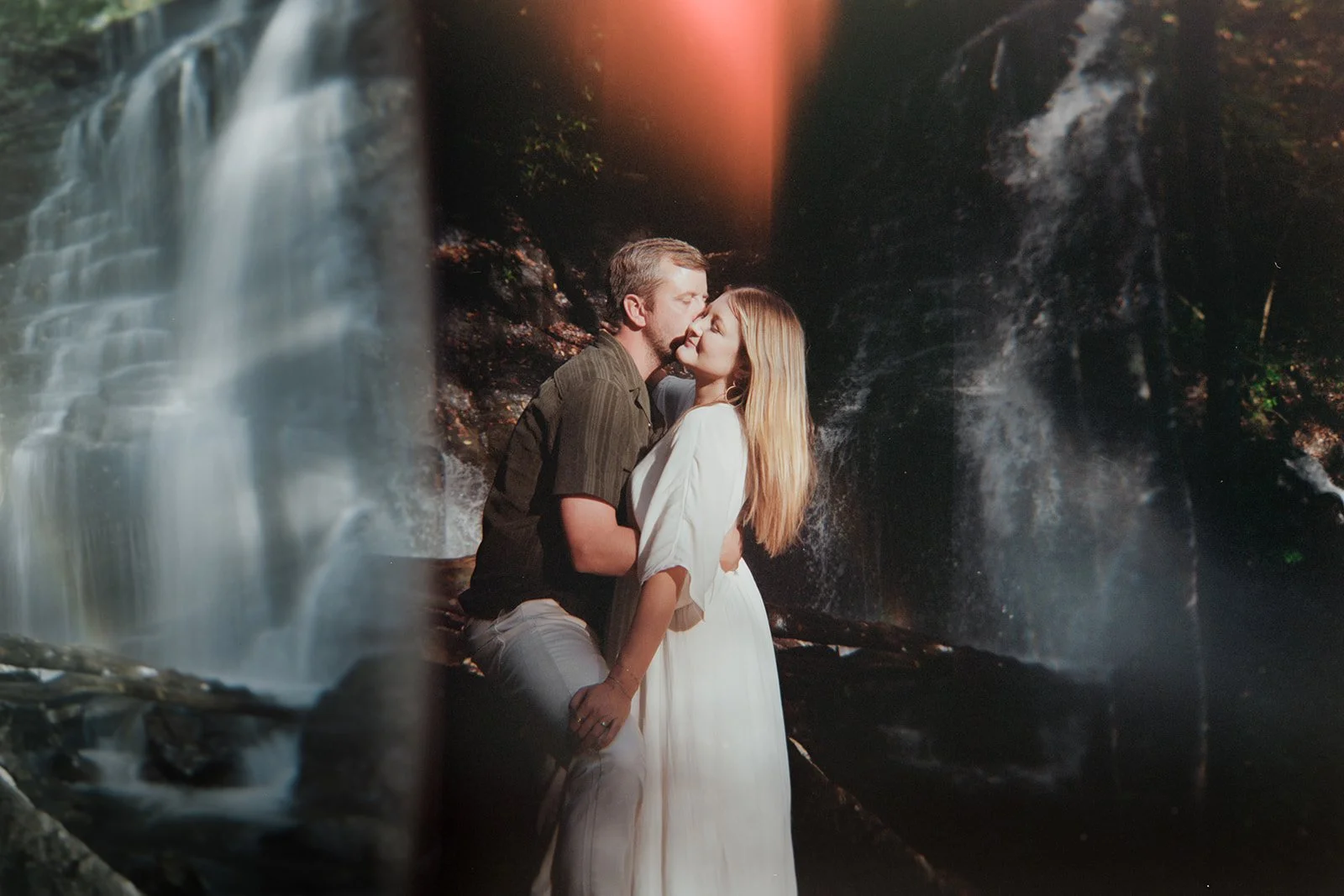
Peak fall is worth it, with caveats
The mid-fall foliage is as unmatched as everyone says. It's my favorite season to photograph, but it's also everyone else's favorite season.
If you want a private elopement experience during peak fall season, you have two options:
Drive toward the Smoky Mountain side of NC, away from the Asheville-adjacent spots that everyone defaults to. Stay near Waynesville or Maggie Valley or go into Nantahala, Bryson City, or Cherokee. You're trading convenience to Asheville for privacy, but if you value the outdoors more than the city, the payoff is so worth it.
Stay off any well-known trails entirely. All the easily accessible and well-known locations like Black Balsam, Max Patch, the popular Parkway overlooks will most assuredly be busy on a fall weekend. That's not inherently a bad thing, the outdoors are for everyone, but it does mean adjusting your expectations if total privacy is what you're after.
I keep a collection of lesser-known locations that I share exclusively with clients through my planning guides. These are locations I've found over years of shooting here that don't show up on the first page of AllTrails. If you'd rather do your own research, AllTrails, local Facebook groups, and some dedicated internet sleuthing will get you there eventually. And if you want to guarantee privacy without any of that legwork, booking a Hipcamp, private Airbnb, campsite, or small elopement venue in the area is a clean solution that sidesteps the whole question.
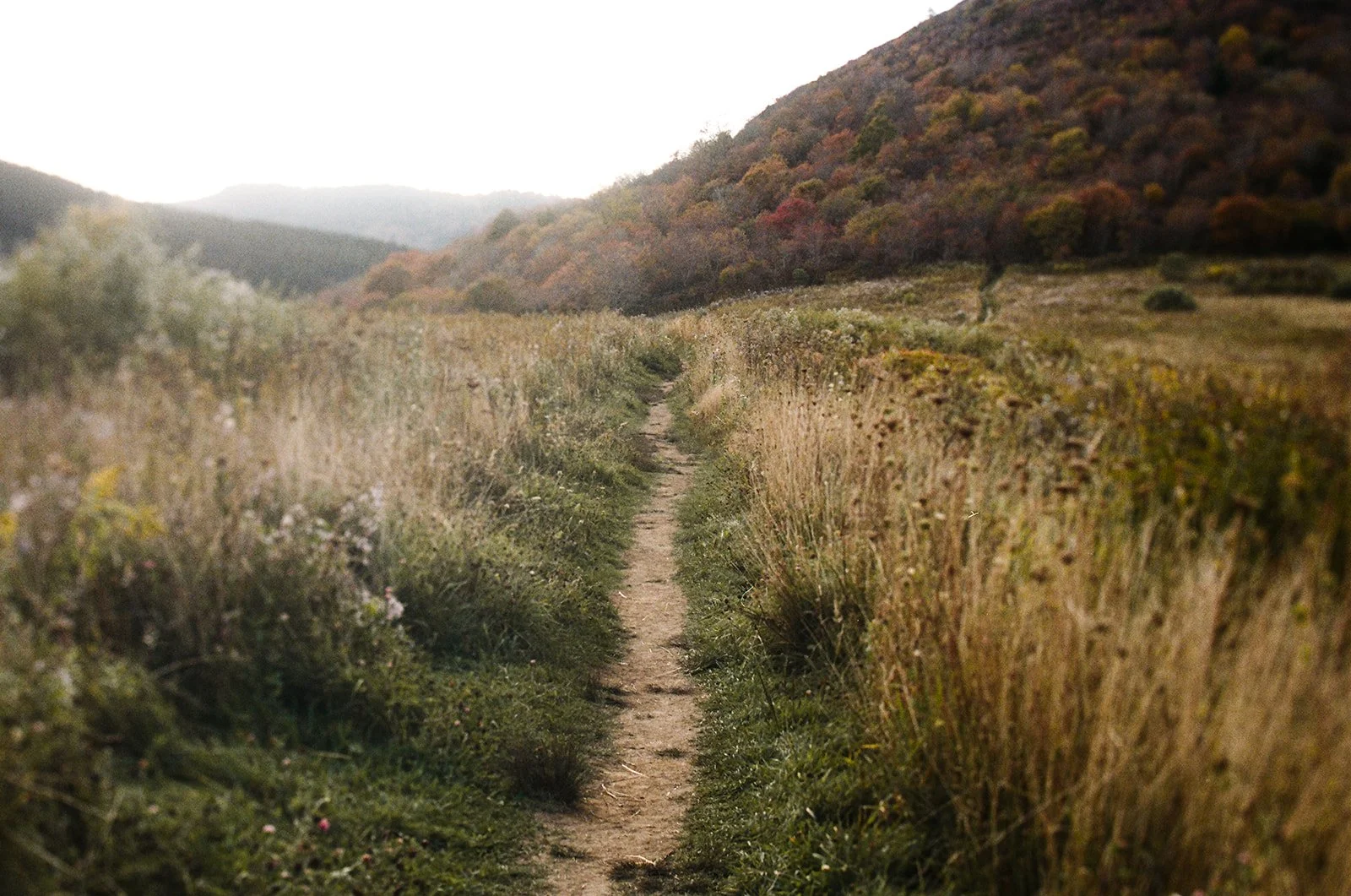
What you'll find below isn't a weather forecast. It's an honest month-by-month breakdown of what eloping in Asheville actually looks and feels like throughout the year.
Every season in the Blue Ridge is unique and has it’s own pro’s and con’s, so before you commit to a date, it’s worth understanding what those may be.
It’s important to note, though, that the mountains make their own weather and no forecast is a guarantee, but generally knowing what to expect (the crowds, flora, avg. temperature) can help you choose a month that fits the elopement experience you’re envisioning.
A month-by-month look
-
January and February are cold. Sometimes bitterly or just persistently, but it’s cold either way. Snow is possible and when it happens the mountains look like a painting.
-
Late February into early March is when things start to shift away from winter. The early bloomers push through if there's no snow cover, the locals start emerging from their homes, and you can still see the Milky Way on clear nights.
March is some of the best hiking weather of the year if you don't like being hot. The trails aren't crowded and there's a particular quality to the light when spring is just starting to show up.
-
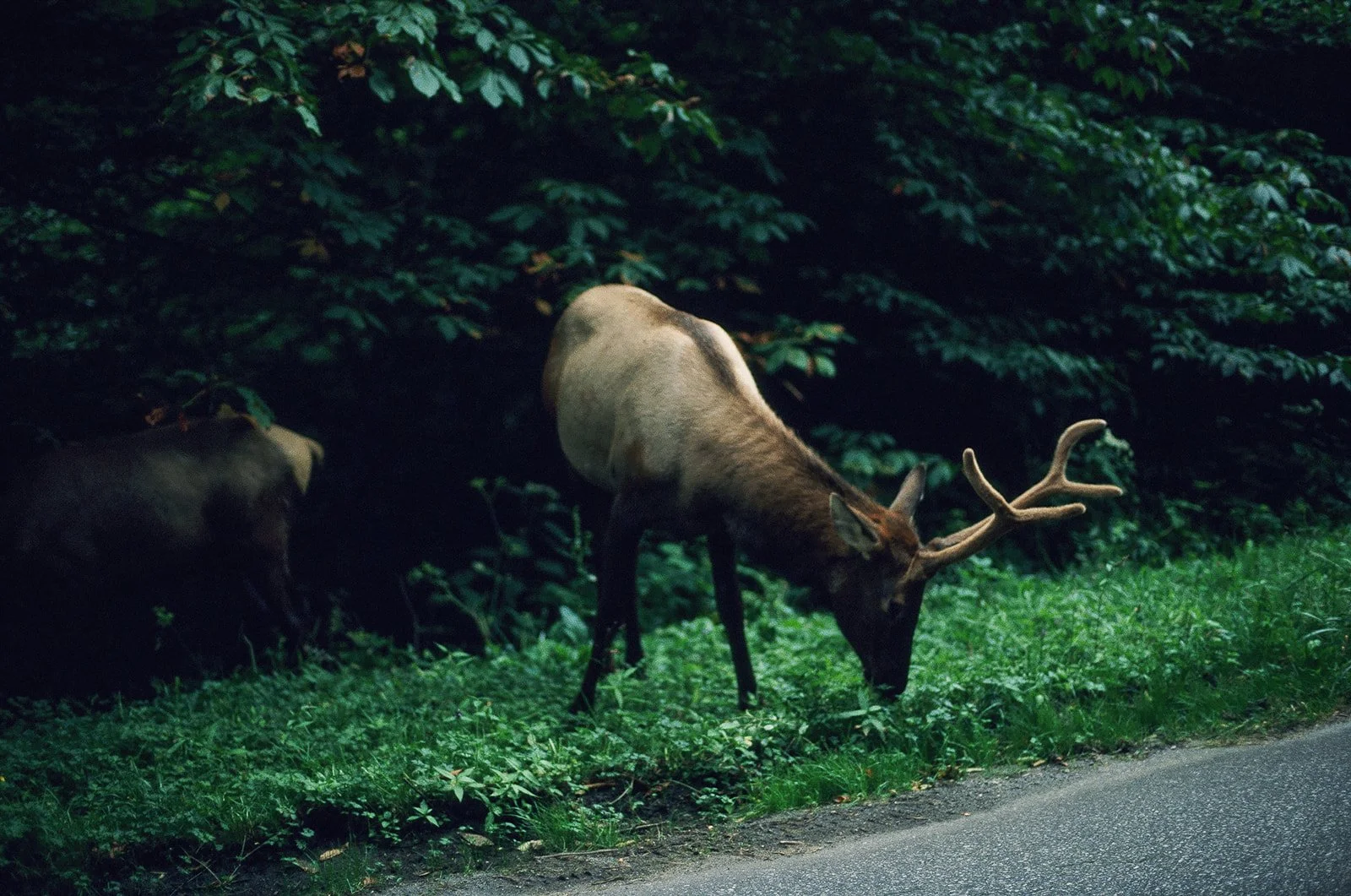
April is when all the foliage wakes up at once. The dogwoods bloom, new growth comes in colorful and bright, and at lower elevations around Asheville and Black Mountain it starts to feel like early summer while the higher elevations are just beginning to stir. The wildlife is waking up alongside everything else: deer, bears, and elk all becoming active again. It's one of my favorite months to shoot here and it's criminally underbooked.
-
May turns lush fast. The bright green of new growth deepens into that full, saturated forest green that obscures the mountain views when you're in the trees. Rain starts coming in more consistently. Everything is alive and thriving (including the bears) and it's juuust warm enough to swim in the rivers if you're brave enough.
-
June and July are full summer. Hot at lower elevations, noticeably cooler on the mountaintops, and the evening light at elevation has this particular warmth to it that makes golden hour so spectacular. Asheville itself is at its most lively with music festivals, farmers markets, arts events, patios full of people, and dogs everywhere. Shaded or waterfall/lake hikes are your friend during the day.
-
Mid-July into August is when you want to be near water. The heat is real and the rain comes in often. But that rain is what makes the clouds iconically “smoke” off the mountaintops and the whole range takes on that classic Smoky Mountain look with layers of blue-gray haze rolling over ridge after ridge.
It's stunning and the Blue Ridge Parkway is the best place to watch it happen. If clouds are covering one overlook, drive to the next one, or wait it out with a picnic in your car and let the mountains reveal themselves on their own schedule.
Late summer is hurricane season. I moved a wedding up an entire day because of an oncoming hurricane. It happens, and if you're planning a late August or September elopement in the Southeast, it belongs on your radar. Having a flexible plan and a photographer who can pivot on a dime is the difference between a scrambled day and a prepared one.
-
September is when the foliage starts turning gold and red at higher elevations, and by mid-September the whole mountain range becomes something out of Lord of the Rings with warm oranges and reds in the foreground, cool blue mountain ranges receding into the distance behind them. Walking through the forest this time of year feels like walking through Lothlórien and I will stand by that comparison.
Peak foliage timing in the Blue Ridge is a heavily debated topic every single year because it's entirely weather dependent, so don't lock yourself into a specific date too far in advance.
-
By early October, fall is in full swing and golden hour earns its name. The deer are out, it's still warm enough for a midday hike, and all the fall festivities are running. This is also when the Parkway starts getting busy.
The second and third weeks of October are peak leaf-peeper season. If you want color without competing for it, late October is usually the better call. The leaves have turned every shade, some have started coating the ground, and at lower elevations below Asheville the fall colors are just hitting their peak. It can be less crowded and in some ways more beautiful.
-
November is quieter. Most of the leaves have fallen, the strong few hanging on, the days getting shorter and colder. The crowds have gone home and the forest grows quieter with them. The ground is covered in leaves and there's still a golden glow that hangs in the afternoon air.
Sunset this time of year is one of my personal favorites to shoot. Something about the low angle of the light and the stripped-down landscape together.
-
December is cold but clear. Fewer crowds, no atmospheric haze, and you can see more mountain ridges in the distance than you can in any other season. The air is just cleaner.
Day hikes in the sun are wonderful, fireside evenings are better. And the night sky near the Smokies this time of year is some of the clearest you'll find anywhere on the East Coast. Your odds of seeing the Milky Way are high and worth planning around if that means anything to you.
Rain disclaimer
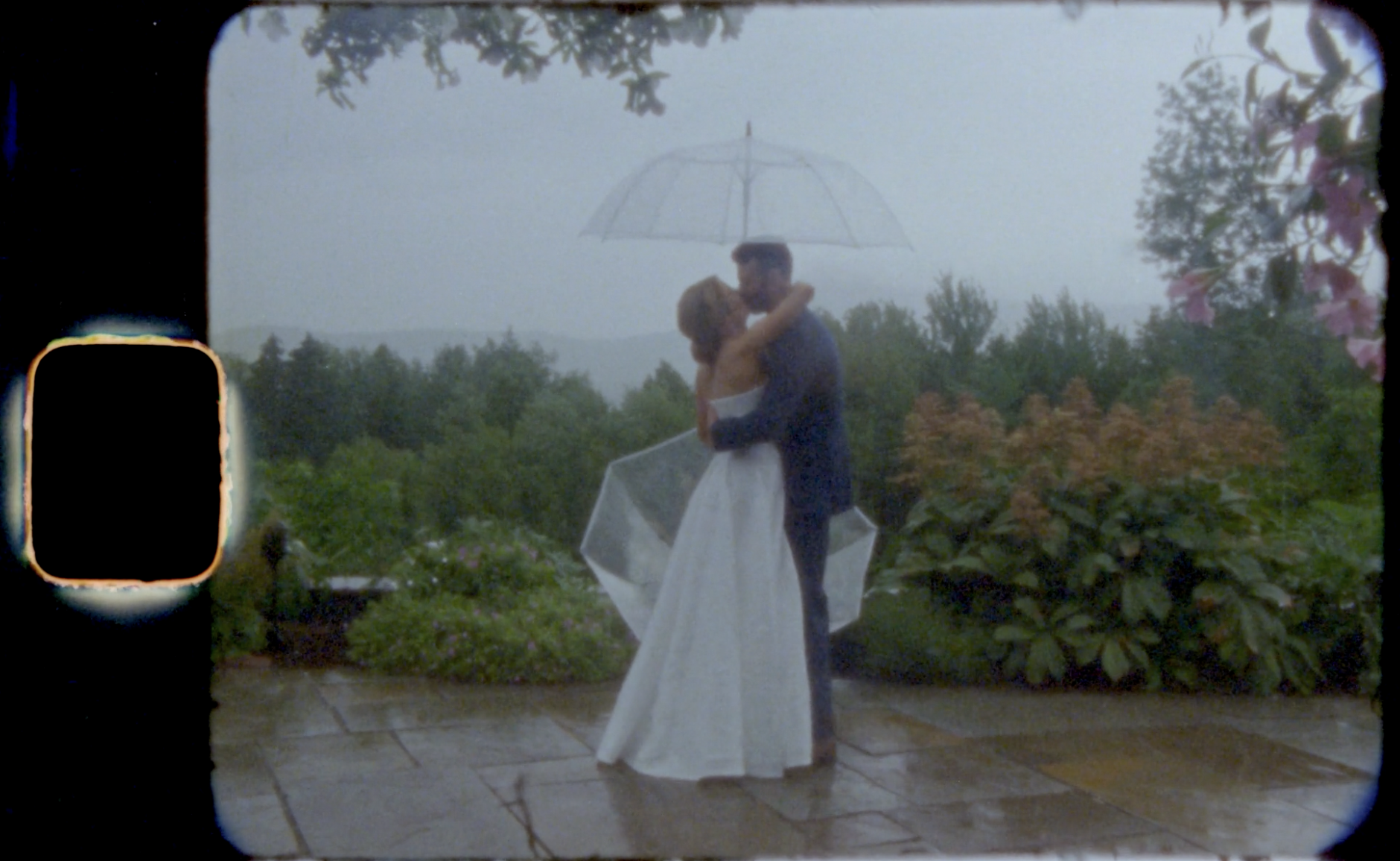
You can never reliably predict what the weather is going to be in the Blue Ridge no more than three days out, and even then you're working with a best guess.
The mountains, especially the higher you are in elevation, create their own weather patterns entirely independent of what the forecast says. I've watched it happen more times than I can count.
Rain, fog, and mist are the most common, and they roll in fast and may (or may not) leave just as quickly.
You might not be thinking about rain now that you’ve started planning. But I’ve already thought it through.
Here’s how I handle rain plans: we build a plan well before your elopement day, and if the weather looks questionable a week out, we stay in close contact and collaborate on what to do instead.
That might mean shooting a day earlier or later, dropping to a lower elevation location, finding something easily accessible on the Parkway so we can duck into a vehicle if we need to, or leaning into the weather entirely. Rain isn't a problem. Being unprepared for it is.
location recommendations
The first question I ask every couple
who considers eloping in Asheville is simple: what kind of experience do you want to have? Not which mountain, not which trail: the experience, because the location follows from the answer.
If you start with the location you'll end up reverse-engineering your entire day around a pin on a map instead of around what actually matters to you.
Most couples want a hike to somewhere beautiful for the ceremony, photos on the way back down, dinner in the city that night, or to book an Airbnb or small venue where friends and family can spend the weekend together. That's a great day and these mountains make it easy.
But within that framework there are a hundred different versions depending on how far you want to drive, how hard you want to hike, how many people you're bringing, and how much privacy matters to you.
The seven regions below are a starting point.
Read through them with that first question in mind (what kind of experience do you actually want) and the right one will start to make itself obvious. In the future, each region will link out to a more detailed guide with specific locations, trail information, and permit logistics. But for now, here’s a light overview.
If you'd rather skip the research entirely and just get a recommendation, that's exactly what the planning process looks like when you work with me.
Gatekeeping and Leave No Trace Principles
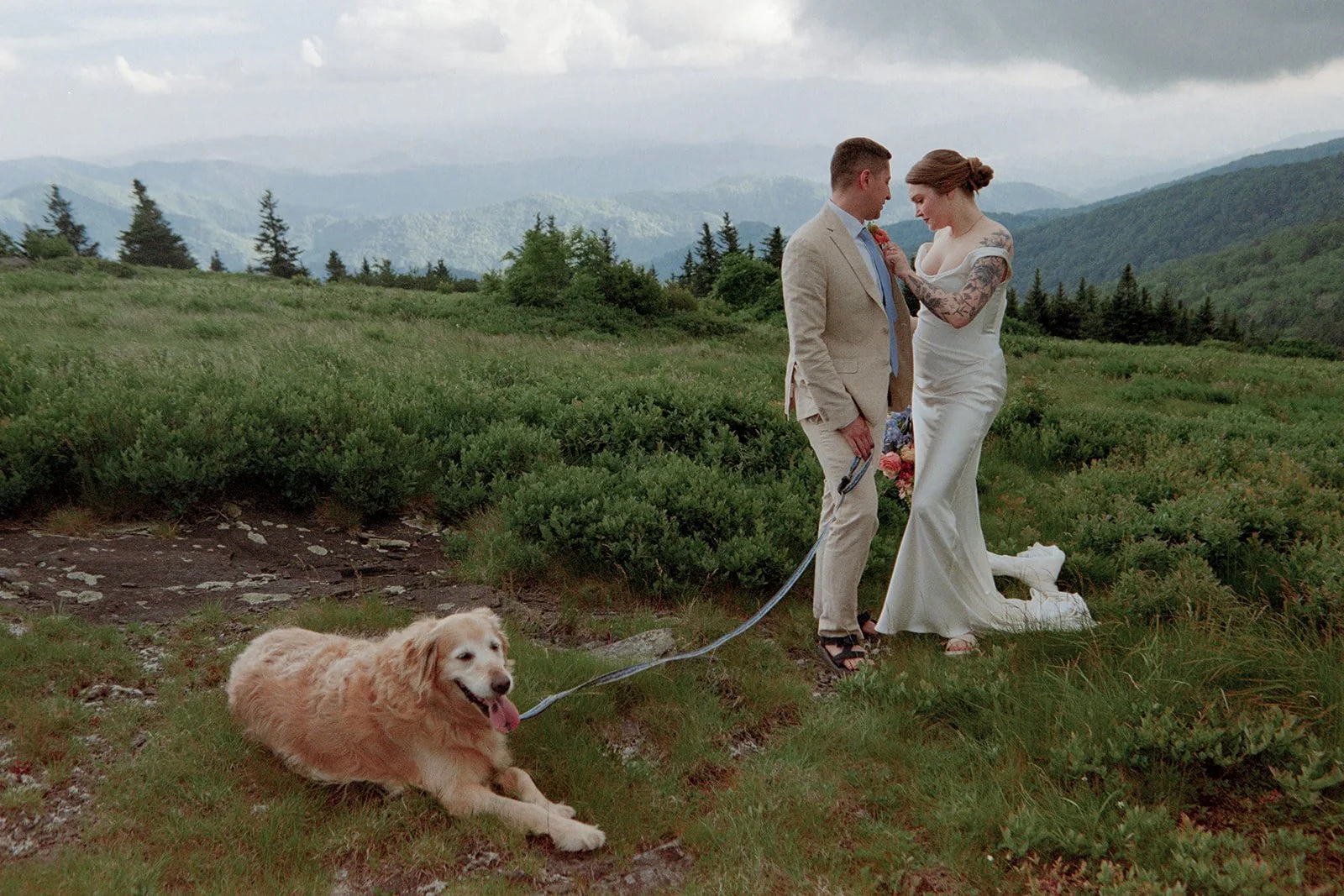
This land of ours is precious and deserves to be treasured, enjoyed, admired, and protected. It’s our responsibility to love the land responsibly. Anytime we adventure out into Mother Nature, please adhere by the Leave No Trace principles, no matter the occasion.
Yes, it may be your wedding day, but it is also hundreds of other’s wedding days, and if you think you are the exception, then so does everyone else. A couple of footprints turns into hundreds and will leave a greater mark on the land than intended.
Which is why you will only find more readily accessible locations in this guide. I reserve the hidden gem, private locations exclusively for folks who choose to work with me. You, too, can find the same locations I know of with a bit of research and location scouting, but for the sake of further protecting the land and providing a truly unique and special experience for all Superlove couples, we reserve these locations exclusively for them.
blue ridge parkway
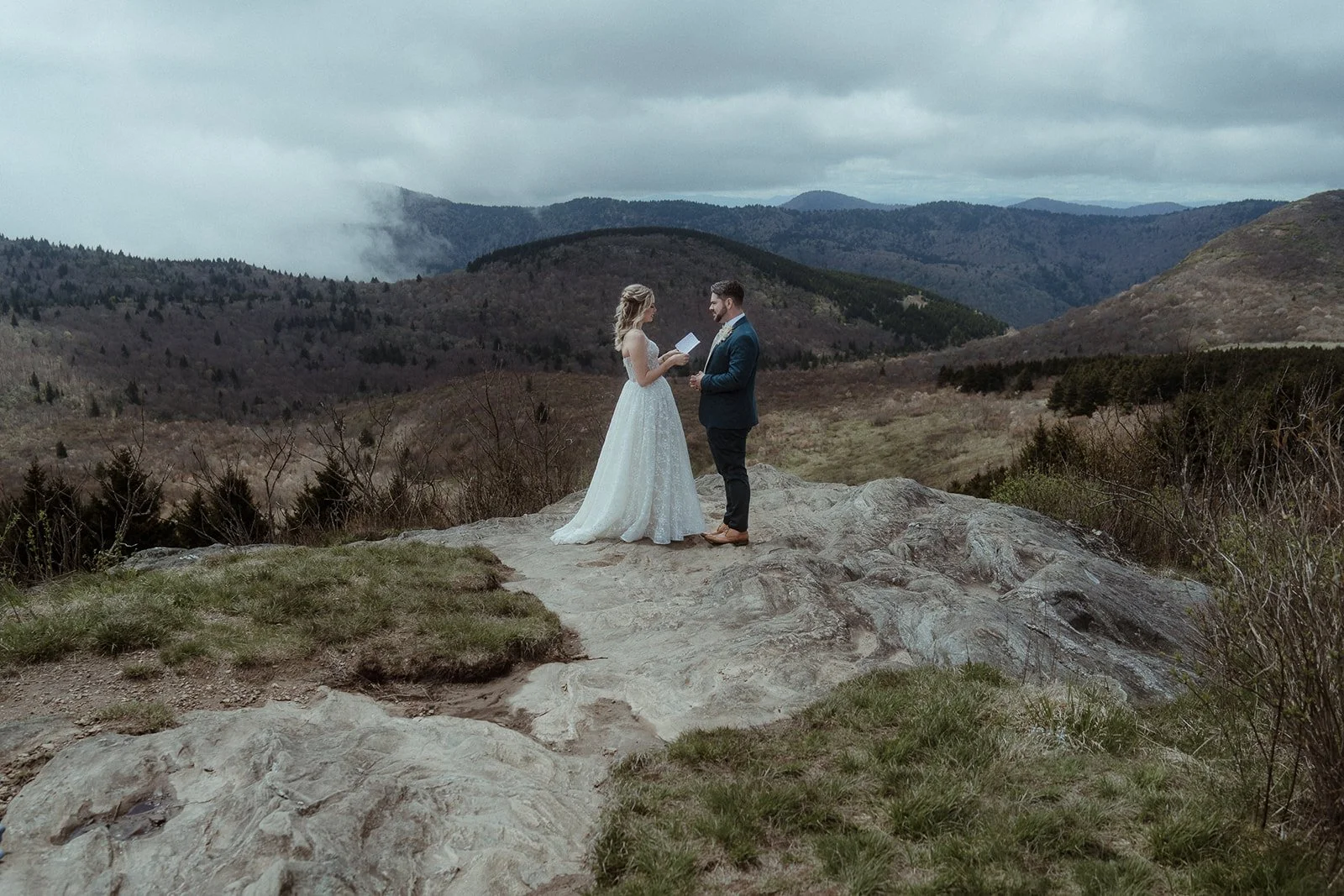
The Blue Ridge Parkway was the first scenic byway in the United States paved specifically for the purpose of enjoying the mountains.
Location. Multiple entrances sit within 10 minutes of downtown Asheville, which makes it the most accessible region on this list by a significant margin. That said, "on the Parkway" and "10 minutes from downtown" are two very different things. Depending on where you're headed, you could be looking at anywhere from 15 minutes to 2 hours of driving once you're on it.
Accessibility. You don't need an off-road vehicle, serious hiking experience, or a full day blocked off. Each overlook is essentially its own small park — pull off, claim a view, stay as long as you want. The Appalachian Trail runs alongside much of the Parkway, so there's usually a quiet trail nearby if you want to stretch the legs without committing to a real hike.
Best time to visit. There's no single best time of day to be here because it depends entirely on what you're after. Early morning brings mist smoking off the mountains, birdsong, deer on the trails. Afternoon is for the most cinematic sunsets. Rainy days are cinematic with the clouds rolling in and the mountains start to disappear and reappear through the fog. Stay till dark and watch the stars appear.
Distance from Asheville: 10 minutes to the nearest entrance / 15 minutes to 2 hours to specific locations
Permits: Required for ceremonies — $100 for groups under 25 through the National Park Service
Physical requirement:Minimal — most overlooks are steps from parking
Best for: Couples who want flexibility, accessible mountain views, and the option to stay in the car if the weather turns
Blue Ridge Parkway Elopement Locations
Waterrock Knob / Grassy Ridge Mine Overlook / Rough Butt Bald Overlook / Sam Knob Trail / Log Hollow Overlook / Mt. Mitchell State Park
Nantahala National Forest
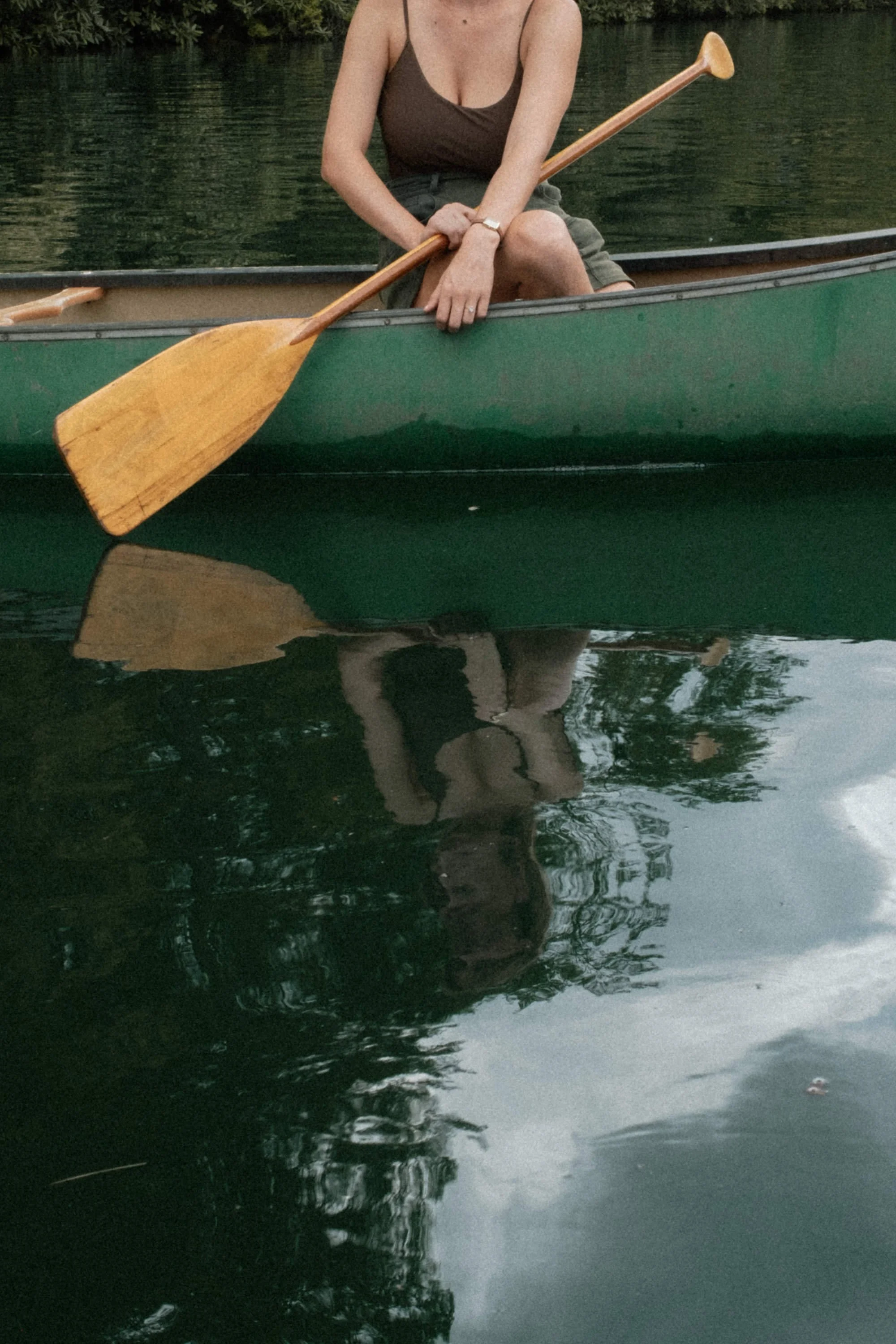
A truly untouched part of the Appalachian Mountain range, Nantahala National Forest is North Carolina’s hidden jewel of the west.
Location. Located approximately 1.5 to 2 hours west of Asheville, NC, Nantahala National Forest sprawls across the most western part of the state. The most noteworthy attraction in the area is the infamous Tail of the Dragon, but if you look closer, you’ll find numerous camping spots, trees as large as redwoods, and crystal clear water for all water sports.
Accessibility. Many locations in Nantahala National Forest are easily accessible by vehicle and foot, but getting there may take the better part of ½ day depending on where you’re coming from. There are numerous put-in’s for boats and canoes, hiking trails, picnic spots, some paved and some not. There’s something for everyone.
Best time to visit. As with any location in this list, the best time to visit is dependent on what experience you’d like to have. Summer is best for water activities, fall for camping and flora and fauna, winter can be a bit difficult to access due to ice and snow, and spring is glorious with it’s vibrant and varied flora.
Distance from Asheville: Anywhere between 1.5 to 2 hours west of Asheville, depending on where you’re going.
Permits: Not required for ceremonies with fewer than 75 guests - Forest Service Website
Physical requirement: Minimal — Moderate, depending on activity and location. Lake Santeetlah and Wayah Bald would be considered minimal due to it’s easily accessible shores and overlook.
Best for: Couples who want spectacular mountain, waterfall, and lake views unencumbered by tourists, and to be fully immersed in nature.
Nantahala Elopement Locations
Nantahala Weddings and Events (venue) / Wayah Bald Lookout Tower / Lake Santeetlah / Rockwood Lodge (luxury venue)
Pisgah Forest
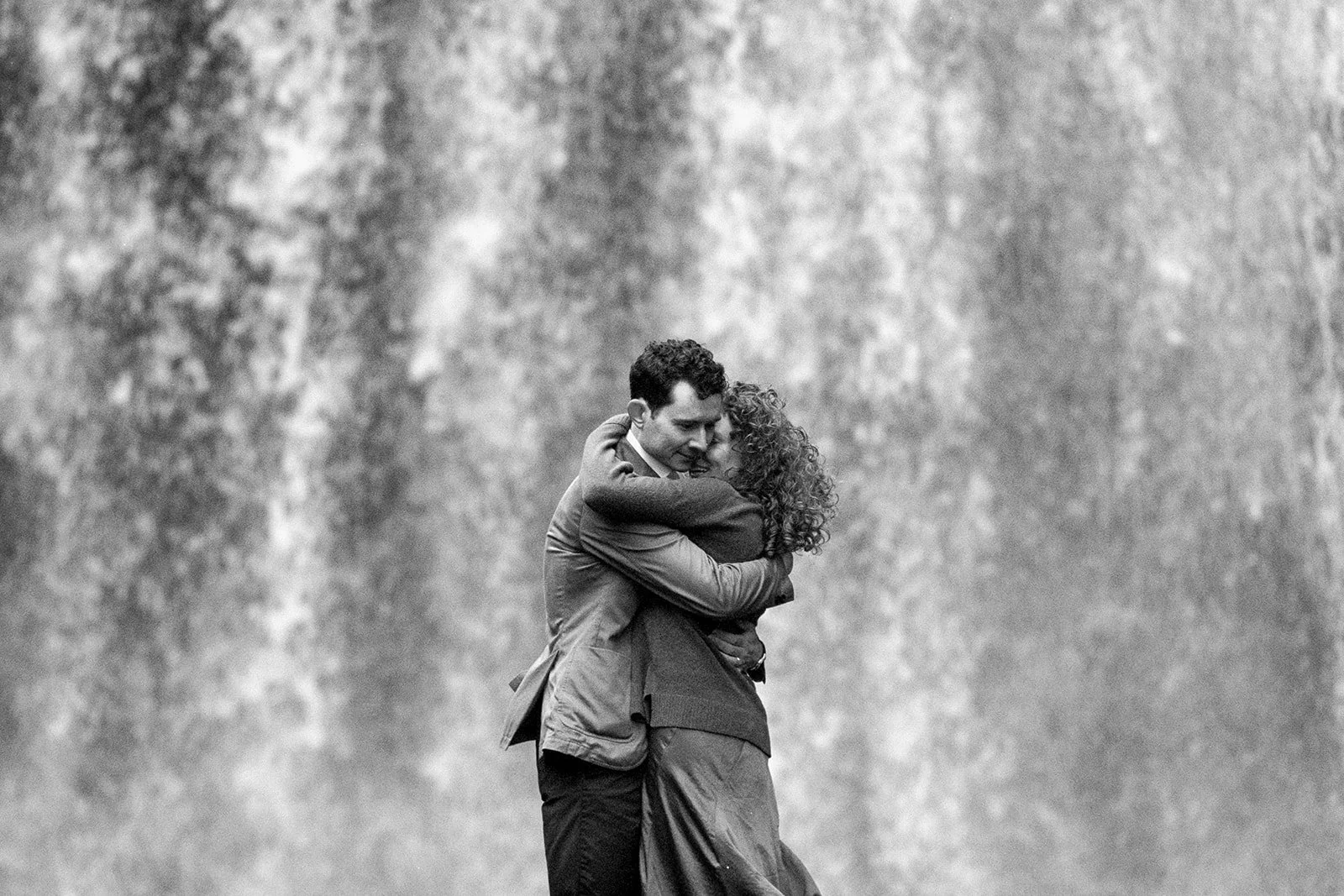
A local favorite and one of the most accessible wild places near Asheville, Pisgah National Forest is where you go when you want to be in nature without spending half your day getting there.
When most people say "Pisgah," they're referring to the Pisgah Ranger District, the stretch of forest centered around the town of Pisgah Forest near Brevard and home to the waterfalls, swimming holes, and river access the area is known for.
It's one of the most versatile outdoor destinations in the region with waterfalls, swimming holes, river access, fly fishing, scenic drives, and direct connections to the Blue Ridge Parkway all within the same stretch of forest. If you know where to look, there are hidden swimming holes tucked throughout that most tourists never find.
Location. Pisgah National Forest sits just 30-45 minutes from Asheville, straddling the area between the city and Brevard to the south. It's one of the most versatile outdoor destinations in the region with waterfalls, swimming holes, river access, fly fishing, scenic drives, and direct connections to the Blue Ridge Parkway all within the same stretch of forest. If you know where to look, there are hidden swimming holes tucked throughout that most tourists never find.
Accessibility. Most of Pisgah's most popular spots are easily accessible by vehicle with short walks to the main attractions. Looking Glass Falls, the most visited waterfall in the forest, is steps from the road. Parking can be tight, especially on weekends during tourist season, as most pulloffs sit right along the roadside. Carpooling is genuinely recommended if you're coming with a group.
Best time to visit. Spring and early summer are peak waterfall season when the water levels are highest and the forest is at its most lush. Summer is best for swimming holes and river access. Fall brings the foliage and slightly thinner crowds on weekdays. Weekends during tourist season gets busy fast, and if you want the popular spots to yourself, go early. Looking Glass Falls at 7am on a Tuesday looks nothing like it does at noon on a Saturday in October.
Distance from Asheville: 30-45 minutes depending on your specific destination.
Permits: Not required for ceremonies with fewer than 75 guests — Forest Service Website
Physical requirement: Minimal — most popular locations are roadside or short walks from parking. More remote swimming holes require moderate hiking.
Best for: Couples who want waterfall and river access close to Asheville, hidden swimming holes, and the flexibility to combine nature with a quick drive back to the city for dinner.
Pisgah Forest Elopement Locations
Looking Glass Falls / Moore Cove Falls / Black Balsam Knob / Sam Knob / John Rock Trail
smoky mountain ntl park
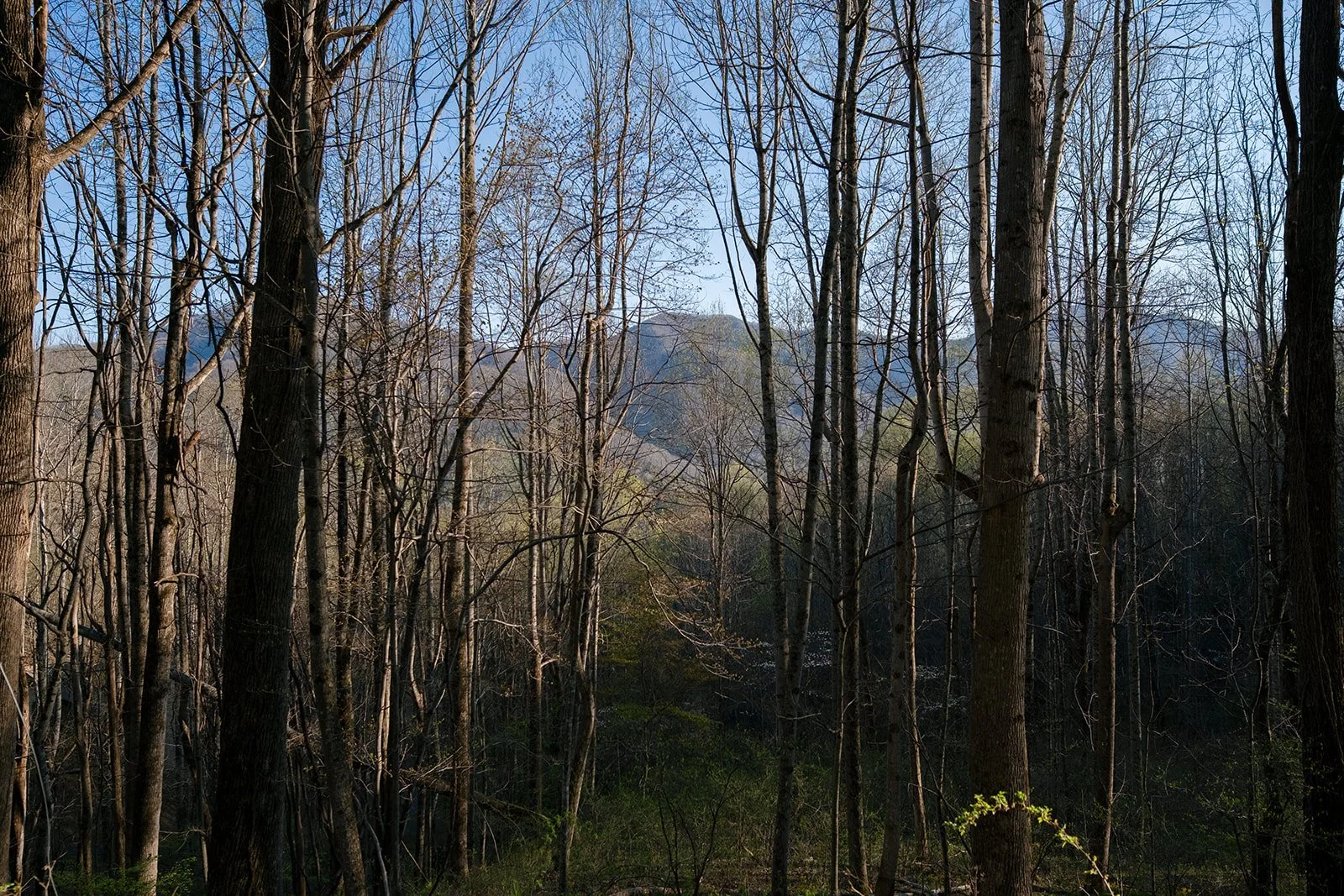
Most couples who visit Asheville never make it this far west and that's exactly what makes it worth the drive.
Location. Great Smoky Mountains National Park straddles the border of North Carolina and Tennessee, but it's the North Carolina side that most people overlook entirely. While the Tennessee side draws millions of visitors annually to Gatlinburg and Pigeon Forge, the NC side remains largely undiscovered. It’s quieter, wilder, and far more intimate. Small towns like Cherokee and Bryson City sit at the edges of the park and offer enough in the way of food and groceries before you head in, but once you're inside the park, you're in the center of the mountains, fully and completely.
Accessibility. Access points on the NC side include Cherokee, Cataloochee Valley, and the Heintooga Ridge Road off the Blue Ridge Parkway. Some areas require longer drives on winding mountain roads. It’s not difficult, but worth accounting for in your timeline. Cell service quickly disappears once you're in the park so plan accordingly and download offline maps before you go.
Best time to visit. Fall is when the Smokies earn their reputation as one of the most popular national parks in the country. The color and scale of the mountains are unlike anything else in the region. Spring brings wildflowers and waterfalls running at full force; summer is lush and green but can be humid at lower elevations; winter is the most private season of all when the crowds are gone, the long views open up, and the mountains feel even larger when they're stripped down to their bones.
Distance from Asheville: 1.5 to 2 hours depending on your specific destination within the park.
Permits: Required for wedding ceremonies — contact the park directly for current permit requirements and approved locations. NPS Wedding Information
Physical requirement: Minimal to moderate depending on location. Some of the most spectacular spots in the NC Smokies are accessible by vehicle. Others require hiking into more remote terrain.
Best for: Couples who want to truly get away from it all. No crowds, no noise, no feeling of performing for an audience. Just two people and mountains that make everything else feel very small and very far away.
Smoky Mountain National Park Elopement Locations
Cataloochee Ranch (luxury) / Heintooga Spur Road / Newfound Gap
Roan Highlands
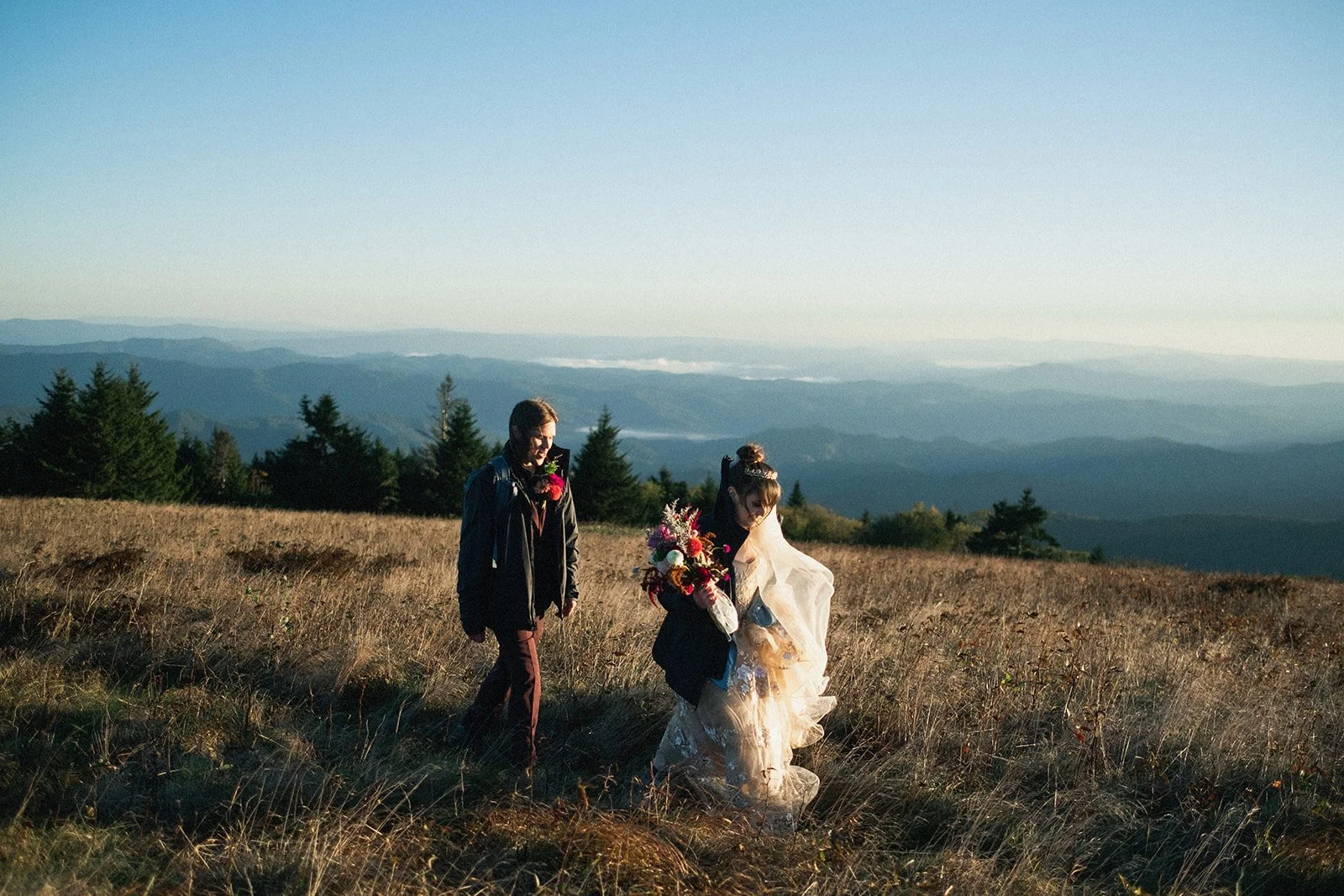
If Max Patch is on every photographer's Instagram, Roan Mountain is where the locals actually go.
Location. Roan Mountain sits on the border of North Carolina and Tennessee, about 1.5 to 2 hours northeast of Asheville. The mountain itself is a high 5-mile ridge reaching 6,286 feet at Roan High Knob (one of the highest points in the eastern United States) and sits inside Roan Mountain State Park.
The summit is one of the most spectacular mountain balds in the entire southern Appalachians with wide open, treeless, long range views in every direction. The hike to the top slithers through dense forest before opening up into one of the most dramatic landscape transitions you'll find anywhere in the region. Every texture the mountains have to offer exists on a single trail here.
Getting There. The access point I recommend is Carvers Gap, a trailhead on the NC/TN border that leads up into the Roan Highlands. It's the most direct route to the open balds and the vast views the area is known for. Roan Mountain State Park has numerous trails throughout, but Carvers Gap is where you want to start.
Accessibility. The hike to the summit is relatively short and not particularly strenuous, manageable for young kids and some elderly visitors, which makes it one of the more inclusive options on this list for couples bringing family. The parking lot fills up fast on weekends, especially in peak season. Carpooling is recommended if you're coming with a group, but you can usually find a spot if you're flexible, but plan for it.
Best time to visit. Sunset on Roan Mountain is one of the most beautiful things I've seen in these mountains when the light catches the open bald in a way that's hard to replicate anywhere else. The famous Catawba rhododendron bloom happens in mid-June and draws significant crowds, so if privacy matters, avoid that window or go early in the morning. Fall is spectacular and slightly less crowded than the Parkway's most popular spots. Spring and winter are the most private seasons.
Distance from Asheville: 1.5 to 2 hours northeast depending on your specific access point.
Permits: Not required for ceremonies with fewer than 75 guests on National Forest land. Confirm current requirements for your specific location before committing.
Physical requirement: Moderate — the hike is accessible for most fitness levels but elevation and exposure mean weather preparedness matters more here than at lower elevation locations.
Best for: Couples who want a mountaintop bald experience without the Max Patch crowds, long range views in every direction, and a sunset that earns its reputation.
Roan Highlands Elopement Location
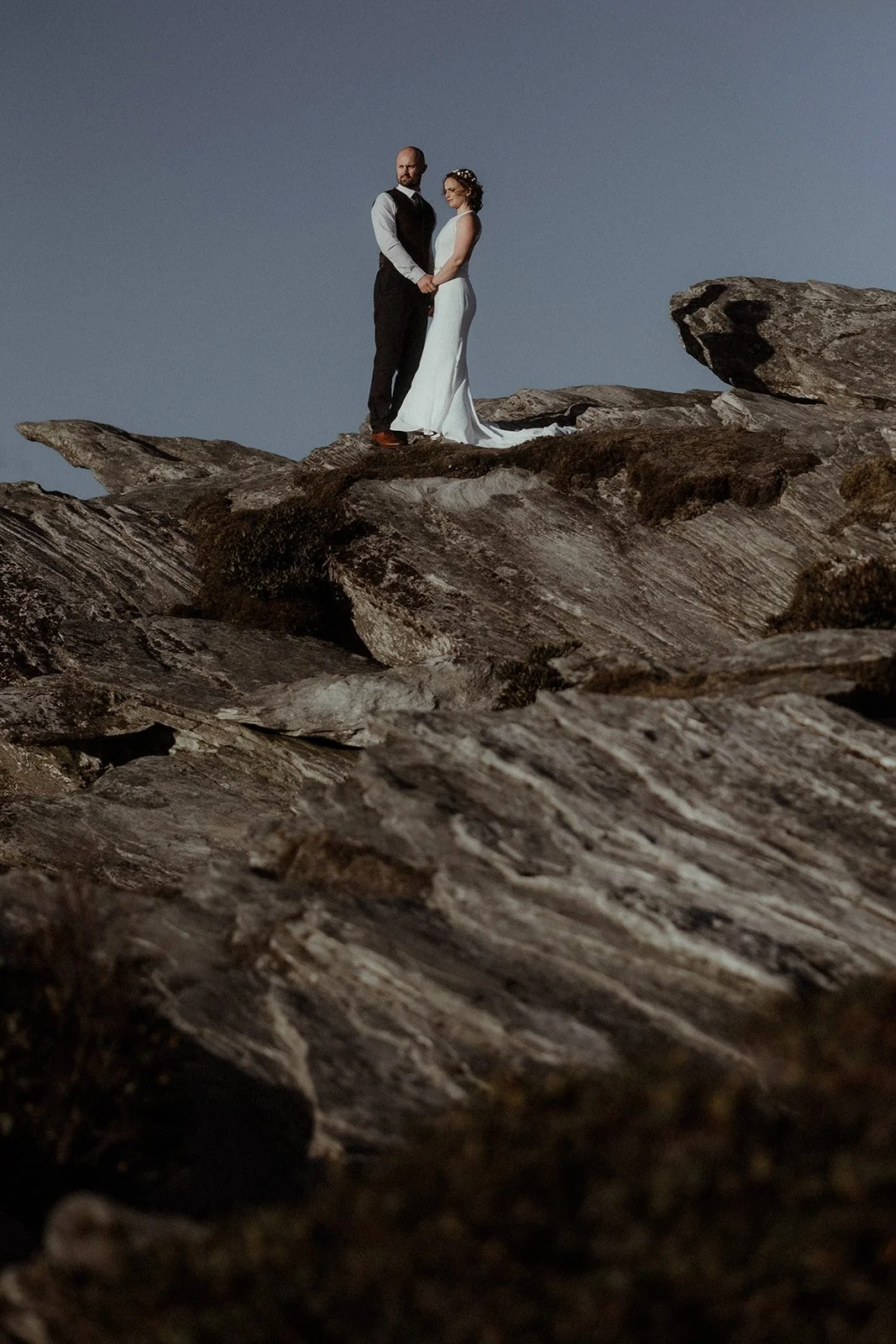
Linville Gorge
Commonly called the Grand Canyon of the East Coast, Linville Gorge earns the comparison.
Location. Linville Gorge Wilderness sits roughly equidistant between Asheville and Boone (about 1 to 1.5 hours from either city) which makes it one of the most accessible wilderness areas on this list despite feeling like some of the most remote terrain in the southern Appalachians. The gorge itself is a dramatic cut through the mountains carved by the Linville River, with waterfalls, sheer rock faces, dense forest, and long range views all existing within the same wilderness area. If you want every flavor of Appalachian landscape in one place, it's here.
Accessibility. This one is for couples who are comfortable on a trail. The hikes into Linville Gorge tend to be more strenuous than other locations on this list with more elevation gain and loss over shorter distances, rougher terrain, and less forgiving conditions the deeper you go. That said, the payoff is proportional. The views and the sense of genuine wilderness you get here are unlike anything you'll find at a more accessible location.
Best time to visit. One of the best kept secrets about Linville Gorge is what happens right before sunset. Most hikers clear out early because the hike back down in the dark isn't something most people want to deal with, which means the couples willing to carry headlamps and hike out after dark essentially get the gorge to themselves at golden hour. That's a significant privacy advantage at a location that can feel crowded earlier in the day.
Fall is stunning here when the color inside the gorge is dramatic in a way that feels different from the open balds because you're surrounded by it rather than looking at it from above. Spring brings the waterfalls running at full force. Summer runs hot at lower elevations but the river access makes it worthwhile. Winter is the most private season and the long views from the rim are unobstructed.
Practical notes. Parking at the most popular trailheads gets tight so carpooling is strongly recommended. Cell service is limited or nonexistent inside the gorge. Download offline maps before you go and make sure your timeline accounts for the hike out in low light if you're staying for sunset.
Distance from Asheville: 1 to 1.5 hours northeast, roughly halfway between Asheville and Boone.
Permits: Linville Gorge Wilderness is one of the few areas in the region that requires a permit for weekend and holiday visits — a free permit system managed through the Pisgah National Forest. Weekday visits do not require a permit. Confirm current requirements before you go. Forest Service Website
Physical requirement: Moderate to strenuous — this is the most physically demanding location on this list. Not the right choice for couples with limited hiking experience or guests with mobility concerns.
Best for: Couples who want wilderness, dramatic rugged terrain, and the kind of views that make everything feel very small and very real. The headlamp hike out is part of the experience.
Linville Gorge Elopement Locations
Hawksbill Mountain / Wiseman’s View / Linville Falls via Plunge Basin Trail / Shortoff Mountain
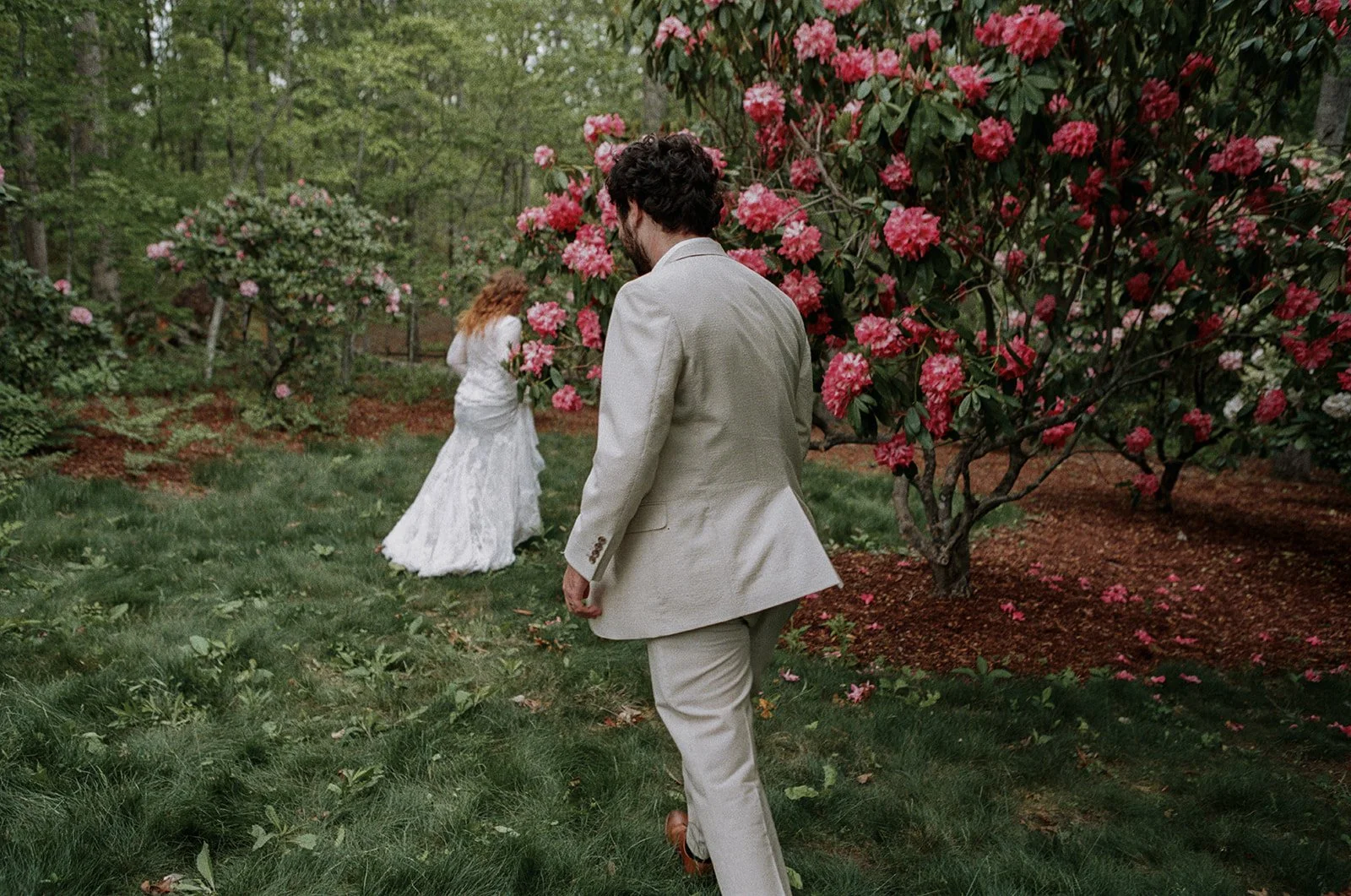
Asheville + Surroudning towns
Not every elopement needs a mountaintop. Asheville and its surrounding towns offer a completely different kind of experience built around good food, walkable streets, local art, and celebrating in a place chocked full of personality.
Asheville
Asheville needs little introduction but deserves an honest one. The arts community here is real — working artists, independent galleries, live music spilling out of venues on a Tuesday night, a food and beer scene that punches well above the city's size. It's dog friendly, walkable in the right neighborhoods, and has a energy that's hard to find in cities ten times its size.
Downtown is the natural starting point with galleries, shops, restaurants, and street musicians within a few walkable blocks. Woolworth Walk is worth a stop for anyone who loves handmade work.
A short walk away is South Slope where you can find all of Asheville’s iconic breweries. Burial is a personal favorite, and when I want to switch it up, Tiki Easy is a great spot to relax in the AC with your pup and a tasty tiki.
West Asheville is where the locals go. It’s a slower pace, easier parking, fantastic food. Leo's House of Thirst for wine outside, Neng Jr.'s if you planned ahead and got a reservation, Dobra Tea for something quieter, the Golden Pineapple for a divey vibey drink that's better than it has any right to be.
The River Arts District is still partially recovering from Helene but the Marquee is worth the short drive from downtown. Stop at Anoche on the way for a margarita.
The Parkway is minutes away and the mountains are right there. Asheville is a rare city that lets you elope in the morning and disappear into the best meal of your life by evening.
Permits: Not required for city elopements — confirm with specific venues if applicable.
Physical requirement:Minimal — this is a walkable urban elopement option.
Best for: Couples who want an urban elopement with real character, or couples who want to combine a mountain ceremony with a city celebration after.
Waynesville
Waynesville calls itself the gateway to the Smokies and it earns the title.
Sitting about 30 minutes west of Asheville, it's the right homebase if you're spending time in the western part of the state (close to Cherokee, the NC Smokies, Pisgah, and Nantahala) without feeling like you're in the middle of nowhere.
Downtown Waynesville is iconically Hallmark, small-town in the best possible way. Great restaurants and breweries (Frog Level is a must), most shops are dog friendly, Saturday farmers market is a great way to start your morning. It's the place you go when you want to be at the doorstep of the mountains without the energy of a bigger city. The pace here is slower, the mountains feel closer, and the whole thing has a charm that's genuine and impossible to manufacture.
I'm biased because I live nearby in Maggie Valley, but Waynesville is consistently underestimated as a base for an Asheville-area elopement. Couples who stay here tend to feel more immersed in the mountains and less like they're in a tourist destination.
Distance from Asheville: 30-40 minutes west.
Permits:Not required for city elopements — confirm with specific venues if applicable.
Physical requirement:Minimal — walkable downtown with easy mountain access nearby.
Best for:Couples who want a small town feel, easy access to the western mountains, and a slower pace than Asheville proper.
Sylva
Sylva sits about an hour southwest of Asheville and is one of the most underrated small towns in western North Carolina.
Tucked into a valley with the mountains rising on every side, it has a compact, walkable downtown with good food and drink options and a local feel with far fewer tourists than Asheville or even Waynesville. The historic Jackson County Courthouse sits on a hill above town and is one of the more striking architectural landmarks in the region.
It's the right choice for couples who want to feel like they've actually gotten away. It’s somewhere with enough going on to spend a day but small enough that you're not competing with anyone for space or attention.
Distance from Asheville:50-60 minutes southwest.
Permits: Not required for city elopements — confirm with specific venues if applicable.
Physical requirement: Minimal — walkable downtown with mountain access nearby.
Best for:Couples who want a genuinely off the beaten path town experience with mountain surroundings and zero tourist energy.
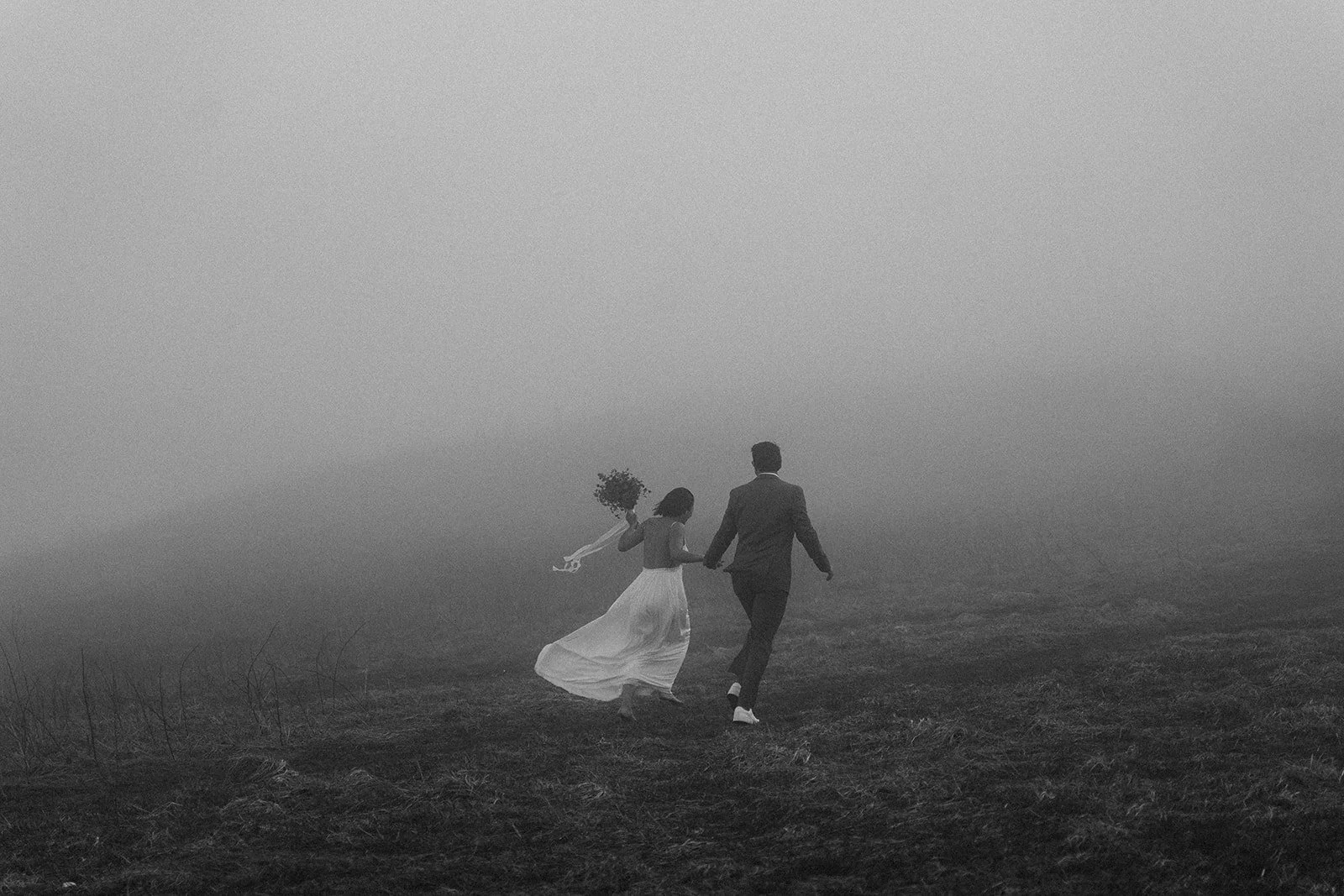
Getting legally Married in NC
To get legally married in NC, you'll need to obtain a marriage license from the Buncombe County Register of Deeds. Both of you need to bring a valid photo ID and your Social Security number. The fee is $60 for a marriage license. There's no waiting period in North Carolina, which means you can pick up your license the morning of your elopement. The license is valid for 60 days and can be used anywhere in the state.
The staff at the Buncombe County Register of Deeds are kind, inclusive, and welcoming to couples of all backgrounds and identities 🏳️🌈 +
You'll need two witnesses at your ceremony. Your officiant can't double as one, but your photographer can. If you're planning to elope with just the two of you, think ahead on who will be your witnesses (*cough* I’ve signed many marriage licenses).
On officiants: North Carolina does not recognize Universal Life Church ordinations, which surprises a lot of people who planned to have a friend officiate. If you're going that route, verify the specific ordination before your wedding day. When in doubt, hire a professional. There are excellent officiants in Asheville who specialize in elopements and know exactly what they're doing.
Read more on the Buncombe County website.
Building your elopement day timeline
Your timeline is one of those things that feels like a somewhat minor detail, but actually it’s the second most important thing to consider after choosing a location + photographer. The couples who have a less than ideal experience on their elopement day almost always trace it back to the same things: not enough buffer time, no rain plan, or a hike that took forty minutes longer than All Trails said it would.
Getting this right earlier makes everything else easier, and lucky you, I’ve put together countless elopement timelines so you can learn from my years of experience.
sunrise vs. sunset
Sunrise
Sunrise elopements feel different from the moment you wake up. Getting up before the sun on your wedding day is already a deviation from ordinary life — the early alarm, the coffee in the dark, the drive to the trailhead while the rest of the world is still asleep. By the time you're hiking up in the quiet, you're in it. The trails are yours. The wildlife is out. There's an intimacy to witnessing nature wake up from a vantage point most people never see, and you feel it. You’ve claimed this day before anyone else could.
After the ceremony and portraits, the rest of the day opens up to whatever you’d like to do. A slow breakfast in town, a nap, a reception dinner with family and friends in the evening. I've watched couples go from a mountaintop ceremony at sunrise to a candlelit dinner with their closest people that same night.
Sunset
Sunset elopements are what most couples tend to do (and what Alex and I did for our elopement). You’ll have spent the earlier part of the day together getting ready, enjoying a slow morning, maybe spending time with whoever made the trip. The anticipation builds throughout the day and golden hour delivers on it.
After the sun drops below the horizon and we move into blue hour, the sky creates a once in a lifetime painting just for you. That's when I'd argue the most visceral images of the day happen.
If you're bringing family or friends, afternoon and sunset elopements are the easier ask. Asking people to show up at 4am for a sunrise ceremony is a different conversation than asking them to meet you on a trail at 5pm.
How much photography
coverage do you need ?
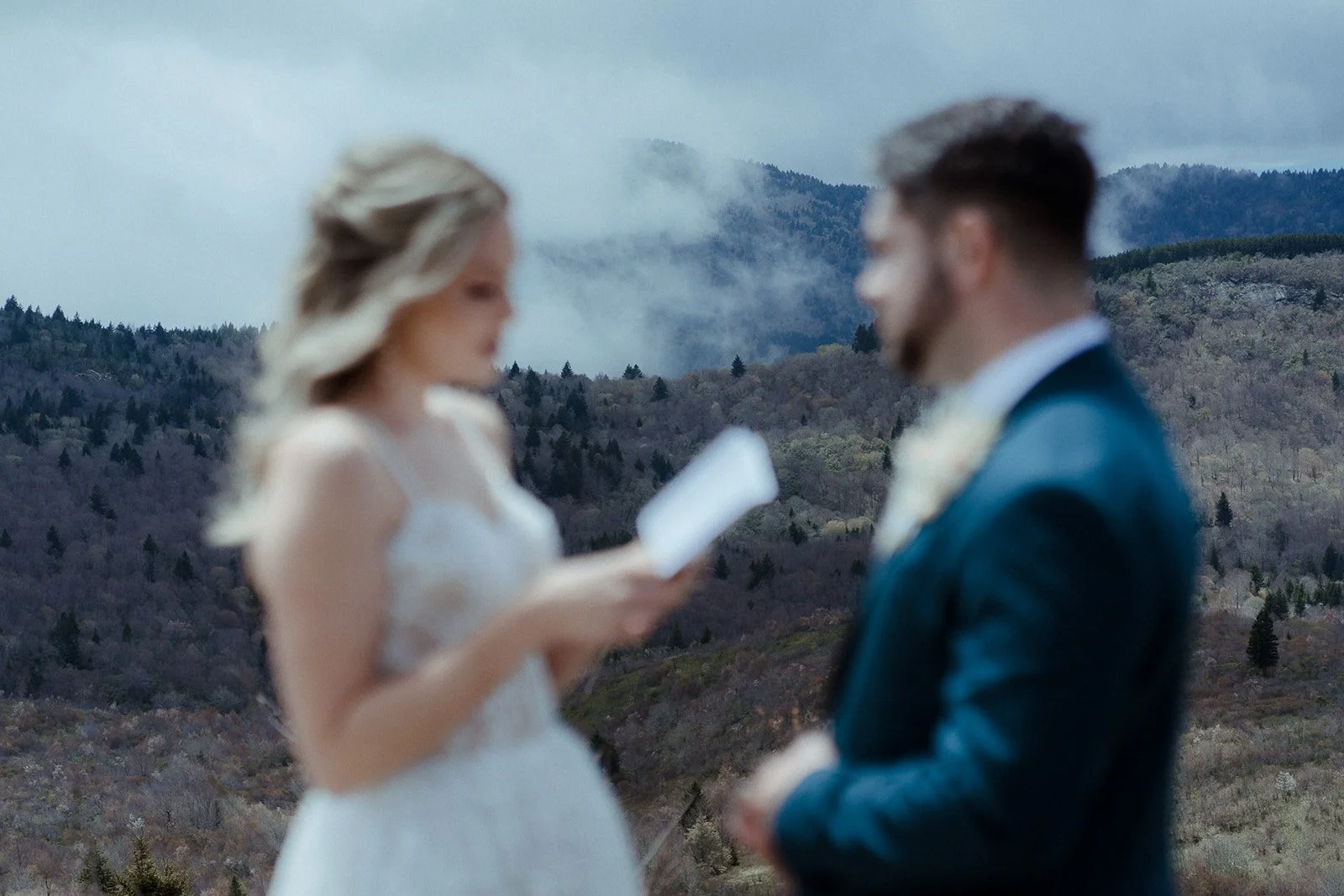
Micro elopement is for couples who want to spend most of the day on their own and just want documentation of the ceremony and a few portraits together. Most micro elopements happen at the Buncombe County Courthouse with a walk through downtown Asheville afterwards, maybe a drink somewhere, and a few photos around town. Simple and intentional. (Usually no more than 2 hours)
Half day is the most popular format for couples who want to get into the mountains. Up to five hours covers getting ready, going to the ceremony site, the ceremony itself, and a handful of couples portraits afterwards. It's enough time to do it right without structuring your entire day around photography. (Up to 5 hours)
Full day is for couples with a bigger vision for the day. Maybe you want to incorporate an activity like horseback riding, tubing, kayaking, or a swim in the river and still have ceremony coverage. Maybe you want a private ceremony in the morning and a reception dinner with family in the evening. Full day coverage gives you the flexibility to build something that doesn't look like anyone else's elopement. (Up to 12 hours)
Weekend elopement is for couples who want to maximize the whole experience. A hiking ceremony with full coverage on day one, a casual couples session somewhere in town or at your lodging on day two, a reception with a hundred and fifty people at a venue that evening. The weekend format is how you elope and still give everyone the celebration they wanted. (2 full days of coverage, up to 12 hours each day)
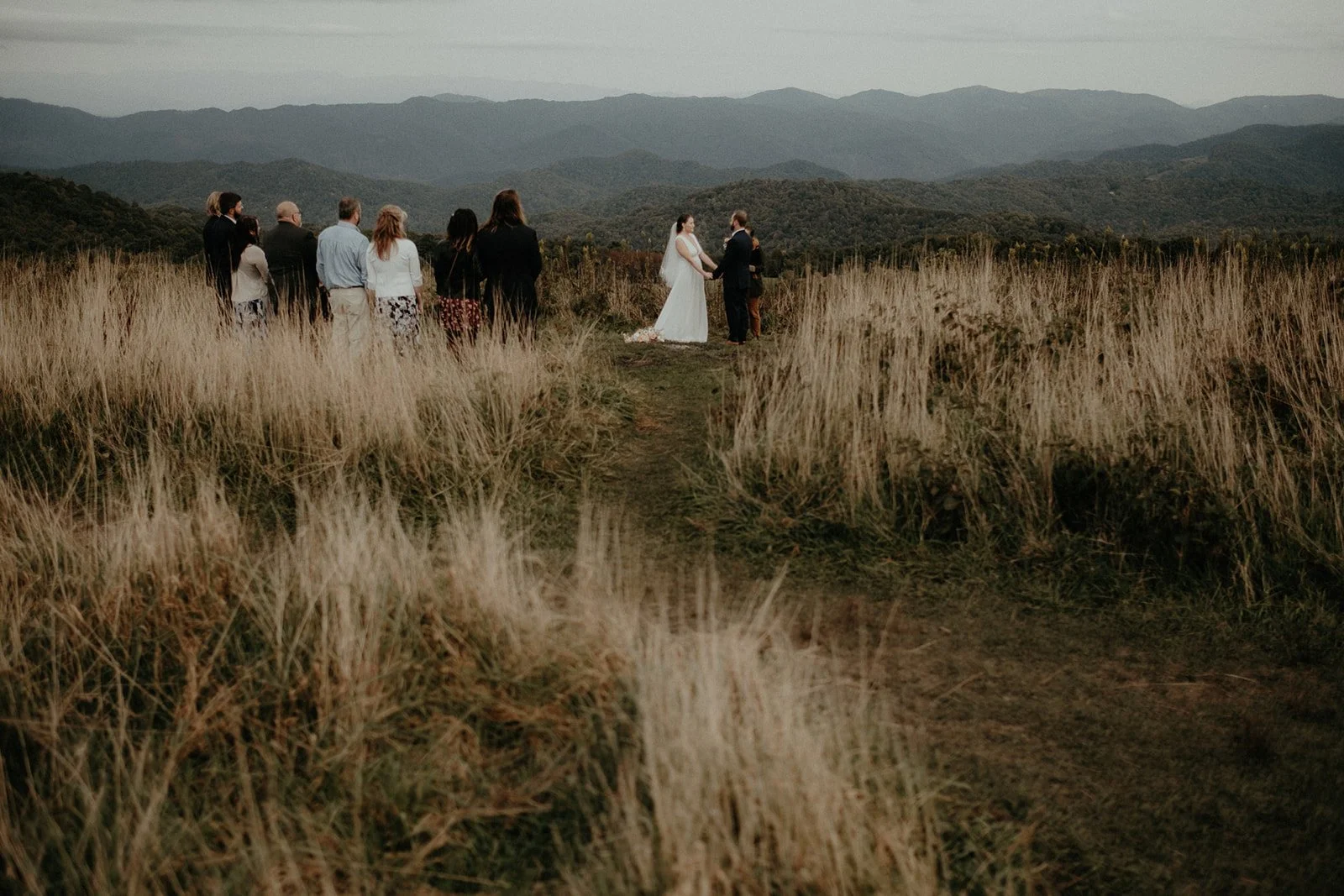
3 Most Common Timeline Mistakes
Three things I see derail elopement days more than anything else, but my standard advice is to always add fifteen to thirty minutes of buffer between every key event on your timeline and to treat your rain plan with the same intention you gave your original plan.
Want help building your actual timeline? I’m putting together a full guide here, coming soon.

Not building enough buffer time into getting ready
Especially if you've booked a hair and makeup artist. The beginning portion of the day almost always runs long and everything afterwards usually gets moved to later in the day from 15 min - 1.5 hours to accommodate for it.
2. Not accounting for driving and hiking time between locations.
A trail that takes forty minutes on the way up in hiking boots takes longer in wedding attire and when you’re taking photos on the way up and down the trail. Missing sunrise or sunset because the hike took longer than planned is easily avoidable by adding more time to your timeline than not.
3. Not having an alternative timeline for the rain plan.
If you have to pivot last minute, it’s best to already have a full-fledged rain backup plan in place, especially if you’re eloping in Asheville in the summer and fall. Winging it creates stress for everyone and it can show in your photos. Having a rain backup plan you'd actually be excited about have already thought through and agreed on means a weather change becomes an adventure instead of a crisis.
Rain is not a disaster.
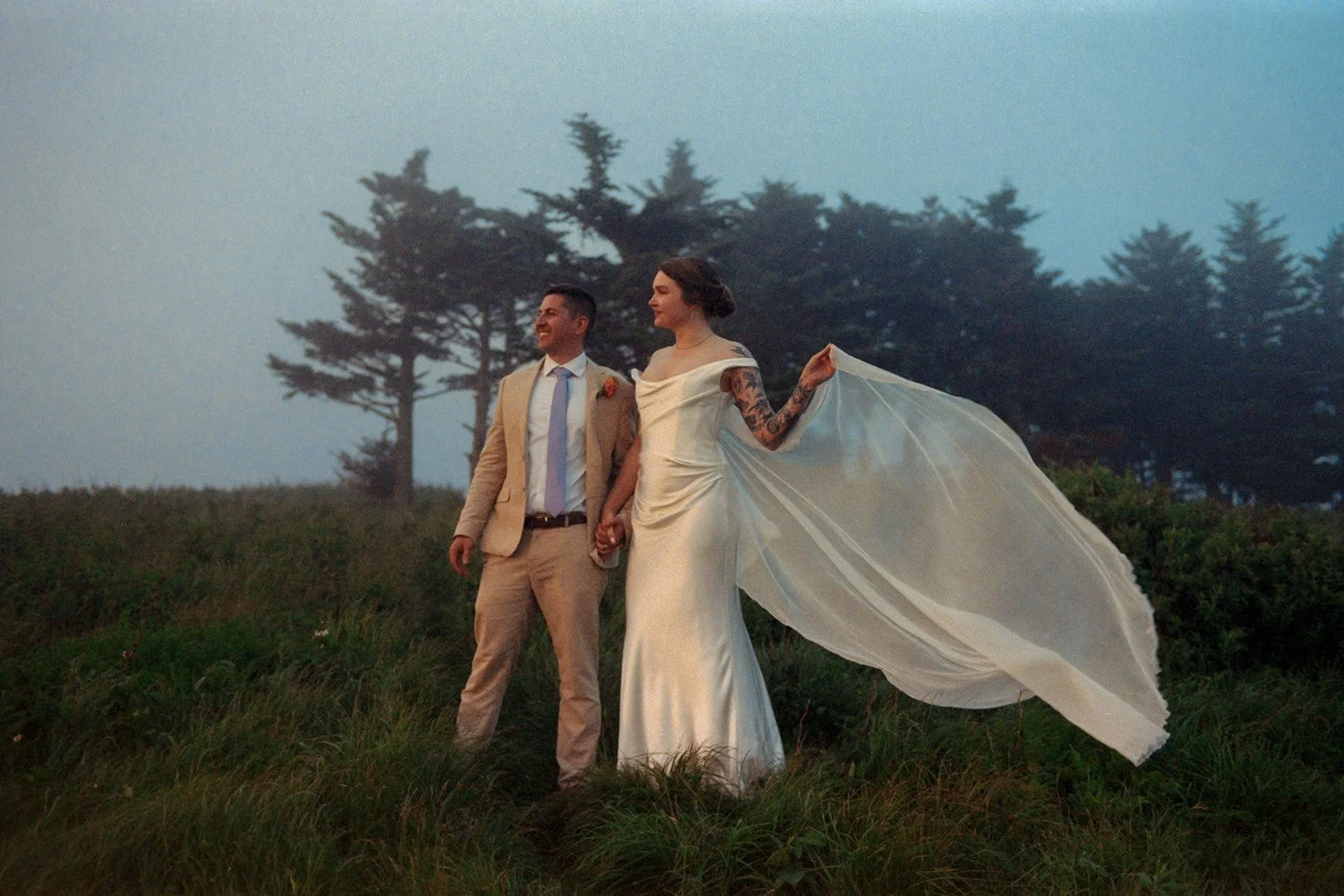
Some of my favorite photos from any elopement have come from days that didn't go according to plan from fog rolling in over a ridgeline, mountains disappearing and reappearing through the clouds, that specific quality of light that only exists when the sky is doing something dramatic. Weather in these mountains is unpredictable, but unpredictable isn't always bad. Being unprepared for it is the only problem.
My advice is to create a rain plan you'd truly be excited about, not just a backup you tolerate. If you treat it as a real option from the beginning, the weather stops being something to dread and starts being just another variable we know how to work with.
your rain contingency plan
Both indoor and outdoor alternative locations.
The Parkway is my most reliable rain backup. We can hit multiple locations in a single afternoon, find light where it exists, and the accessibility means we're never stuck somewhere without options. Some couples end up preferring their rain day Parkway elopement to whatever they originally planned.
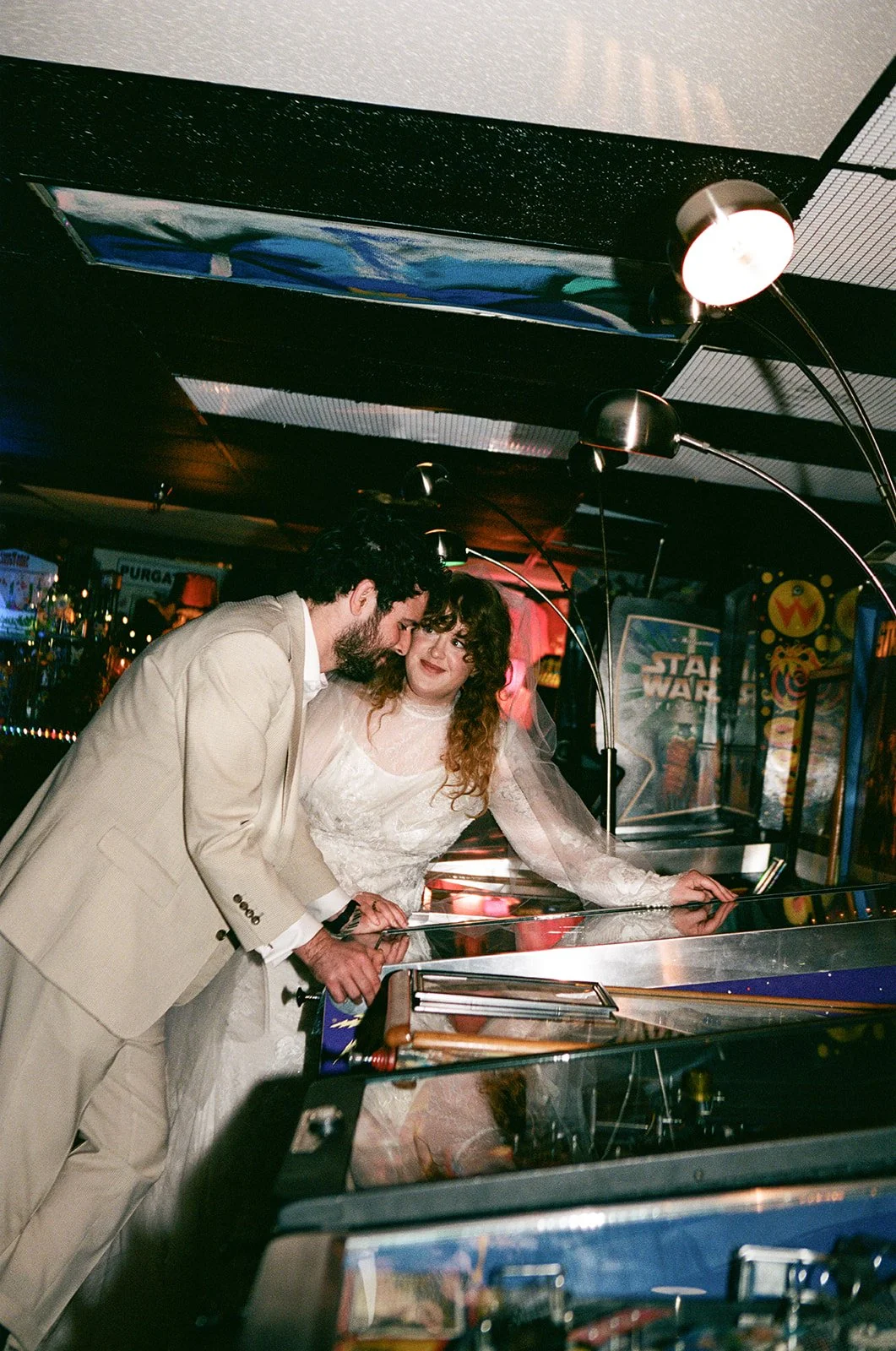
If the outdoors is completely off the table, Asheville has an abundance of unique indoor locations. The River Arts District and downtown both have covered and indoor spaces with unique architectural character. Artist studios, intimate restaurant private rooms, and some of the most interesting interior spaces in the Southeast are all within a short drive of wherever you're staying. A city elopement in the rain with the right location and the right light is a different kind of beautiful.
Day-of decision tree.
I can't reliably predict what the weather is going to do more than three days out, and even then I'm working with a best guess. If your elopement is coming up and the forecast looks questionable a week out, I'll reach out and we'll start talking through options together. We're not making a final call a week out, we're just making sure we have a plan we'd both be excited about if we need it.
If rain is rolling in but it's light and intermittent, we stay the course and we shoot between breaks, duck back into a vehicle when we need to, and wait for the mountains to do their thing. If the forecast calls for heavier rain, we have a few real options: drop to a lower elevation where the weather is often completely different, drive the Parkway and work from overlooks where we can stay close to the car, or pivot to a covered or indoor location entirely. If conditions are unsafe (lightning on an exposed ridgeline, for example), we move the day. This conversation is never a surprise because we've already talked through it.
What to do after the ceremony
You just got married. The hard part (the planning, nerves, hiking in wedding clothes, is done!) What's left is just Asheville, and Asheville is very good at this part.
-
If I'm sending a couple somewhere after their elopement, it's West Asheville.
Highly walkable, dense with good food and drink, and completely different in energy from the more tourist-facing parts of downtown. Leo's House of Thirst for a glass of wine outside and something light. Neng Jr.'s if you planned ahead and got a reservation — Michelin-recognized, intimate, genuinely unlike anywhere else in the city. The Asheville Westside Pub if you want a cold beer and a burger and zero pretension. The Golden Pineapple if you want something divey and vibey with drinks that are better than they have any right to be. Park once and wander. It's that kind of neighborhood.
-
The River Arts District is still rebuilding after Helene but the walkable stretch that's back is worth your time — pop into artist studios, see what people are actually making here. The Marquee is my personal favorite. From there, downtown is an easy walk or a short drive — coffee shops, independent stores, live music spilling out of pubs and music halls, breweries in South Slope if you want to sample your way through the afternoon. I've watched couples do all of this in their wedding clothes and it's the right call every time. You only get to be newly married once. Wear the outfit.
-
Description text goes here
-
No agenda is also a valid plan and sometimes the best one. Grab food to go and drive the Parkway until you find an overlook worth stopping at, then watch the sun go down with a snack and nowhere to be. Head back to your lodging after dark, crack the windows, build a fire, make s'mores, watch a movie on the couch. Some of the best elopement days I've heard about ended exactly like that — just two people, newly married, finally alone together with the whole quiet evening ahead of them.
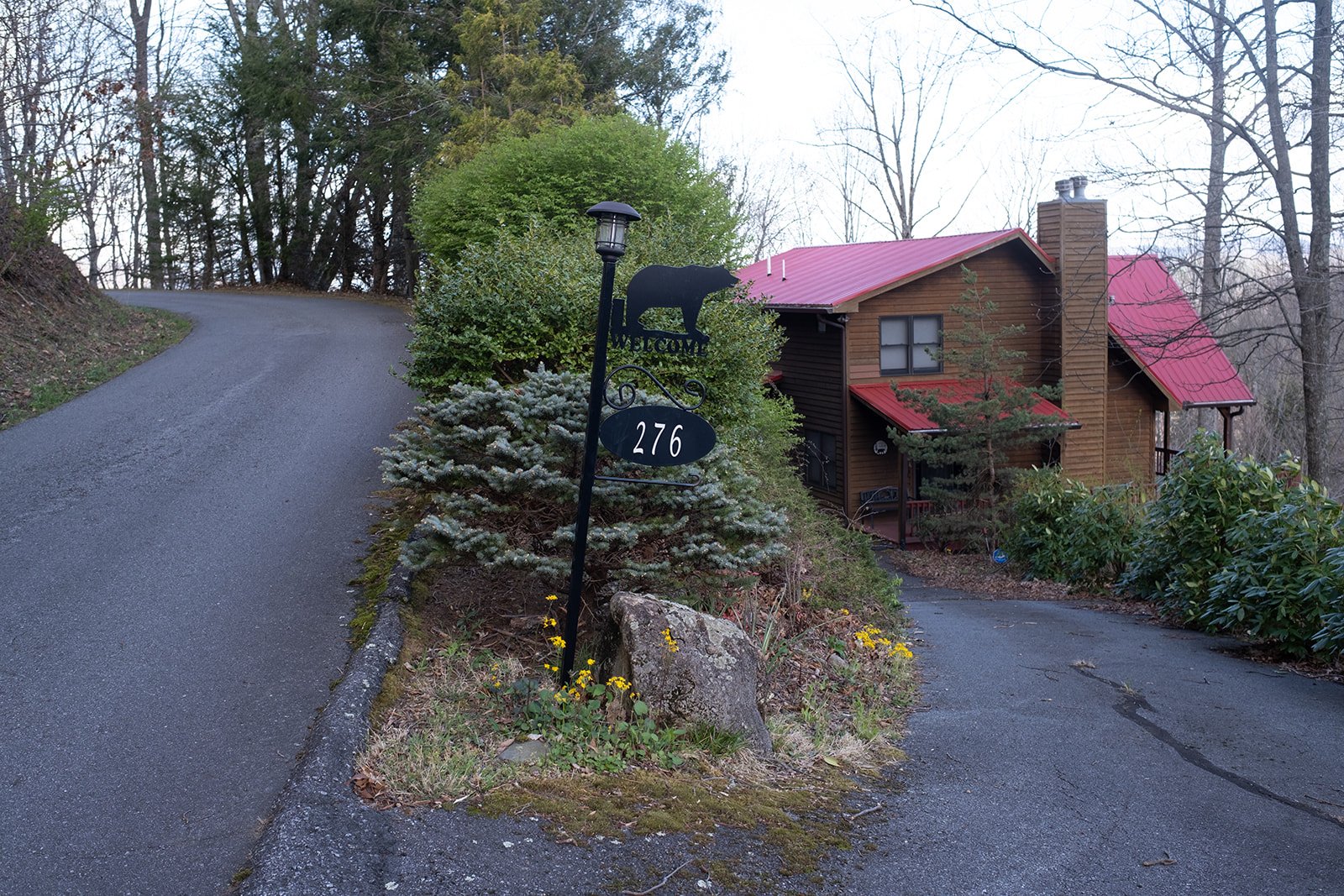
where to stay
The first question I ask couples about lodging is simple: do you want to stay close to town or do you want to get away from it all?
If you want to stay in Asheville proper, West Asheville is the sweet spot — walkable, lively, close to the best food and drink in the city. East Asheville is a quieter alternative with more greenspace and still an easy drive to everything. Downtown is fine but it runs busy, especially on weekends, and the walkability advantage disappears fast once the crowds show up.
If you want to be in the mountains, the surrounding towns are worth looking in to. Black Mountain, Candler, Leicester, Weaverville, and Waynesville all sit within 20-40 minutes of Asheville and offer a fundamentally different experience that’s quieter, more remote, nestled in the landscape. I'm biased toward Waynesville because it earns its reputation as the gateway to the Smokies and I live nearby in Maggie Valley. It’s the perfect place to get away from it all.
The short-term rental market here is also unusually good. A quick search turns up mountain-view cabins, architectural dream homes, properties with private waterfalls in the backyard, treehouses, A-frames, and van-friendly Hipcamps for couples who want something more rugged. There's something for every speed.
Consider this before booking accommodations:
How far is your lodging from where you're actually eloping? It sounds obvious but it catches couples off guard more than you'd expect.
If you're staying in Maggie Valley, saying your vows at sunset on Roan Mountain, and have a dinner reservation in Asheville afterwards, you're looking at getting home around 1am. That's not necessarily a dealbreaker, but it's worth mapping out the full day before you commit to a location.

looking for an ashevile elopement photographer?
hello, I’m alexa
I've been photographing elopements since I first picked up a camera professionally back in 2018 in Boone, NC. Hiking boots on, film loaded, ready to follow couples as far into the Western North Carolina wilderness as they wanted to go. Since then I've guided countless couples deep into these mountains to exchange vows with the Appalachians as their witness.
This land means something to me beyond the work. I love it the way I love my family, my friends, and my dog, which is to say, quite a lot. My family heritage traces back to Scotland, and the Appalachians and the Scottish Highlands share a particular kind of ancient, weathered soul that I've always felt in my bones. These mountains are in my blood one way or another. Getting to share them with couples on one of the most significant days of their lives is deeply fulfilling as an artist.
working together
Every Asheville elopement I photograph starts with the same question: what does your ideal day look like? Not the Instagram or Pinterest board version - yours. My way of finding the answer is to stay curious, ask questions, and most importantly listen, so that's where we begin.
From there, I bring everything only a local photographer can. I know these mountains across every season - which locations are less populated in fall, which trails are worth the drive, which spots I'd never recommend and which ones I'd fight for.
I build timelines around real conditions (not the ideals) which means your elopement accounts for tourism patterns, golden hour at your specific location, and enough flexibility to pivot if the weather decides to have other opinions. In the fall especially, when hurricane season and peak tourism overlap, that flexibility is the peace of mind you want to have when planning your elopement.
What you won't get from me is a template that’s copied and pasted across every couple. I have a reliable system for planning elopements that makes sure nothing falls through the cracks, but the way it gets applied looks different for every couple. Some people want every detail mapped out months in advance, while some want to show up and trust me to make it all come together, but most fall somewhere in between. Wherever you land, my job is to make sure your elopement feels like yours and is documented in a way that reflects who you truly are.
asheville elopement photography packages
Photographing the Appalachian Mountains on film is always a delight. Film transports us right back to the feeling of a moment, and isn’t that the point of photography as a whole?
The Asheville elopements in my portfolio aren't styled or disingenuously constructed. They’re real elopements of couples who stopped managing their day and embraced living in the present, and we had the honor of photographing it. We’d love to do the same for you.
